
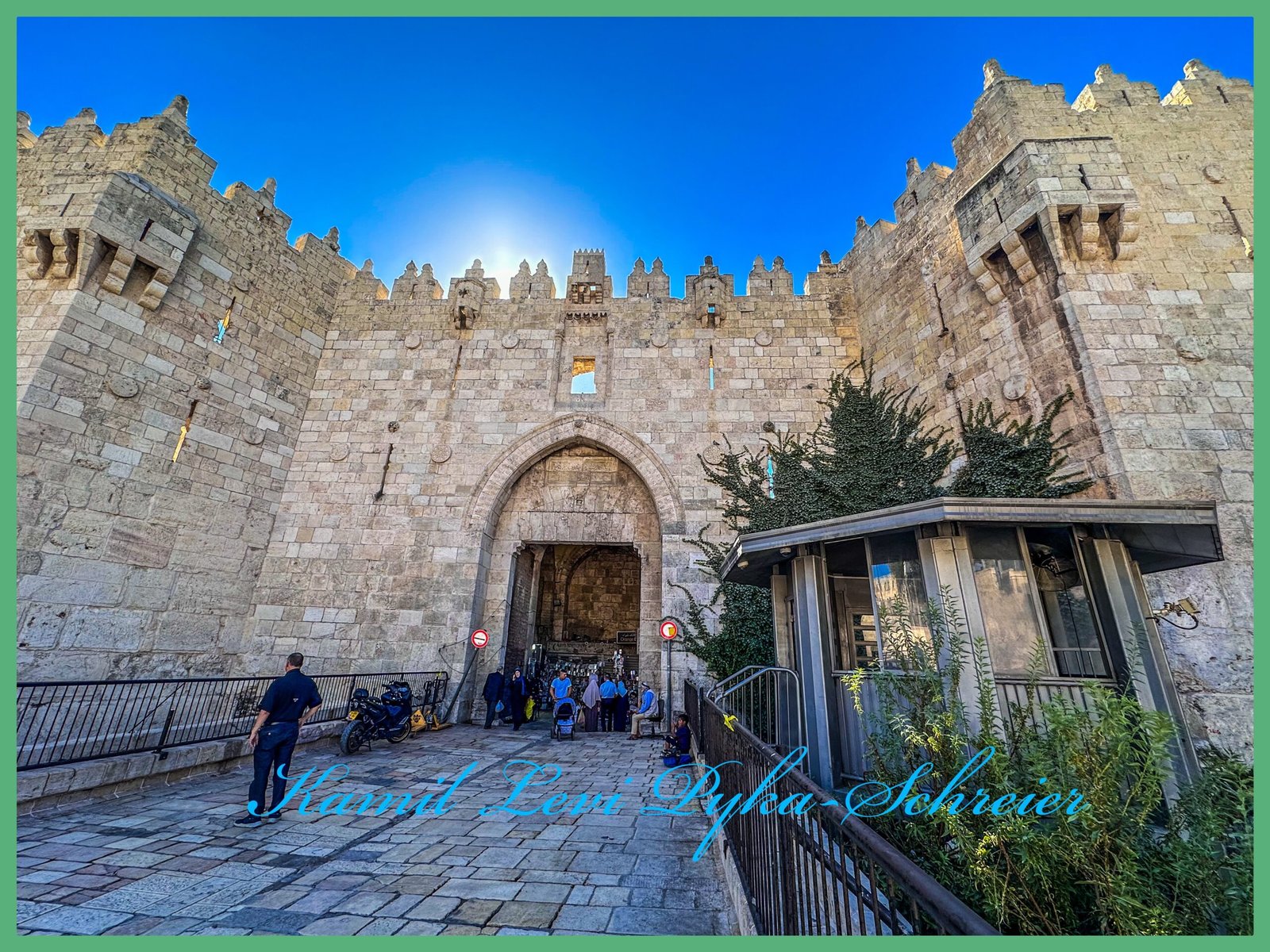
The Strength of Sarah: An In-depth Exploration of Chayei Sarah
The narrative of Sarah, the first matriarch of the Jewish people, is deeply woven into the fabric of Jewish tradition and theology, encapsulated in the biblical portion known as “Chayei Sarah,” which translates to “The Life of Sarah.” This section of the Torah, found in Genesis 23, chronicles the pivotal events surrounding her life, her death, and the legacy she left for future generations. The story of Sarah is not simply a recounting of her years; it is an intricate tapestry that reflects the profound spiritual significance she embodies—strength, resilience, and an unwavering commitment to her family and faith.
The Life and Legacy of Sarah
Sarah lived for one hundred twenty-seven years, a lifespan that holds deep meaning within the Jewish tradition. The Torah begins this portion with the straightforward yet profound statement: “And the life of Sarah was one hundred and twenty-seven years.” This simple declaration opens the door to deeper exploration into the spiritual dimensions of her life. Each segment of her life reflects various aspects of the Divine and humanity, illustrating her role as a matriarch who bridged the gap between the spiritual and the worldly.
To understand Sarah’s life fully, it is essential to consider her experiences—from her journey with Abraham as they ventured into the unknown to her struggles with infertility and the eventual birth of Isaac, who would carry forward the covenant of G-d with Abraham. Sarah’s life was marked by challenges that tested her faith and resilience. Yet, through these trials, she emerged as a figure of strength and guidance, shaping the destiny of the Jewish people.
The Numerical Significance of Sarah’s Life
In Jewish thought, numbers are imbued with meanings that extend beyond the arithmetic. The numerical value of the Hebrew word for “was” (va-yih’yu), which opens the verse detailing Sarah’s life, is 37. In Kabbalistic teachings, this number holds significant spiritual implications, particularly as it relates to the Divine attribute of gevurah, which translates to strength or might. Sarah’s embodiment of this attribute is not merely a reflection of her physical strength but rather a manifestation of her spiritual resilience and determination.
The numerical value of the Name Havayah (the Tetragrammaton) when spelled out equals 63. This spells out a deeper connection to the Divine feminine aspect represented by the attribute of binah (understanding). The interplay between these numbers—37 and 63—symbolizes the balance between strength and wisdom that Sarah exemplified throughout her life.
Through her trials, Sarah exhibited a unique capability to channel the Divine attributes into her daily life. This integration of spiritual strength and wisdom provided a foundation for her descendants, allowing them to navigate their own challenges and embody these traits. Sarah’s legacy of faith and resilience continues to resonate throughout Jewish history, inspiring countless individuals.
The Role of Ima in Jewish Spirituality
Sarah’s role as the first matriarch aligns her with the concept of Ima, representing the maternal aspect of Divinity. In Kabbalistic teachings, Ima is associated with the emanation of nurturing and understanding, embodying the qualities of love, compassion, and wisdom. As the matriarch, Sarah serves as a living example of these qualities, reflecting the nurturing side of the Divine.
The life-force of Sarah can be seen through the lens of the sefirot, particularly within the first third of Tiferet, where the Divine attributes of gevurah begin to manifest. Tiferet represents harmony and balance, and its central role in the kabbalistic tree of life illustrates the importance of integrating strength (gevurah) with compassion (chesed). Sarah’s life exemplifies this balance as she navigated the complexities of her circumstances, demonstrating an unwavering commitment to her family and faith.
Moreover, the Hebrew term “Ima” speaks to the nurturing qualities of motherhood, and this role is integral to Sarah’s identity. She was more than a figurehead; she was a teacher, mentor, and guiding light for her family. The transmission of values, beliefs, and traditions from one generation to the next is a central theme in Jewish spirituality, and Sarah’s role as a matriarch illustrates the profound impact of maternal influence on the values upheld by the Jewish people.
The Importance of Role-Modeling in Education
One of the most profound lessons derived from Sarah’s life is the critical importance of role-modeling in education and leadership. The idea that one’s behavior carries weight in shaping the values of others is a powerful teaching in Jewish thought. Just as a parent or educator imparts values and ideals to their children or students, Sarah’s life serves as a model for the generations that followed her. Her unwavering faith, perseverance, and strength resonate deeply within Jewish tradition, inspiring countless individuals to embody these qualities.
This principle is reinforced in Kabbalistic teaching, where Z’eir Anpin and Nukva, representing the emotional attributes, are seen as offspring of the higher intellectual partzufim (Abba and Ima). Just as children inherit qualities from their parents, so too do students absorb the values and beliefs of their teachers. Role-modeling transcends mere instruction; it involves embodying the values one wishes to impart.
Sarah’s life reflects this concept acutely. Her faith in G-d, demonstrated through her actions and choices, became a guiding light for Isaac and later for Jacob and his descendants. The narrative shows a deep interconnection between spiritual principles and practical actions, illustrating that true education stems from the integration of belief and practice.
The Legacy of Sarah: A Kabbalistic Perspective
From a Kabbalistic perspective, Sarah’s life can be viewed through the lens of the sefirot, which represent different aspects of Divine emanation. Her total lifespan of one hundred twenty-seven years can be broken down into categories that reflect the intricate interplay of these attributes:
**One Hundred Years**: An expression of keter (crown), indicating the highest spiritual realities and the profound depth of her influence. The notion of “crown” relates to the idea of leadership and spiritual authority, suggesting that Sarah held a unique position in the divine narrative of the Jewish people.
**Twenty Years**: Representing chochmah (wisdom) and binah (understanding), suggesting the intellectual foundation upon which her life was built. These years can be seen as a period of deep learning and growth, shaping her wisdom and understanding of the world around her.
**Seven Years**: Corresponding to the seven lower sefirot, from chesed (kindness) to malchut (sovereignty), illustrating the practical manifestation of her spiritual insights in everyday life. Each of these years reflects the different aspects of her character and the qualities she instilled in her family.
The relative intensity of the sefirot is thus divided into these three levels—super-intellect, intellect, and emotional attributes—illustrating how Sarah’s life was an embodiment of these principles. She was not merely a matriarch; she was a divine channel through which higher spiritual truths were revealed and lived. Her legacy is one of strength, nurturing, and unwavering faith, a model for all who seek to embody these qualities in their lives.
The Deep Significance of One Hundred Twenty-Seven Years: An In-Depth Examination of Sarah’s Life and Legacy
The story of Sarah, a revered matriarch within the annals of biblical history, is not just a chronicle of her life; it is a profound narrative that embodies numerous themes of spirituality, identity, and divine purpose. Her life, which spans one hundred twenty-seven years, is a tapestry woven with intricate threads of symbolism, significance, and rich spiritual insights that echo through Jewish thought and tradition. This essay aims to explore the complexities of Sarah’s life and the implications of her legacy, particularly through the lens of malchut, or sovereignty, as well as the theological, numerical, and spiritual dimensions that make her story a cornerstone of the Jewish heritage.
The Context of Sarah’s Death: A Moment of Mourning and Reflection
The death of Sarah in Kiryat Arba, known today as Hebron, marks a pivotal moment in the biblical narrative that extends beyond mere chronology. Her passing is infused with emotional depth, as illustrated by the heartfelt eulogy and mourning rituals performed by Abraham. This act of mourning is not just a personal expression of loss; it signifies the profound bond that existed between Sarah and Abraham, highlighting their relationship as one characterized by mutual respect, enduring love, and shared commitment to their divine mission.
The location of Kiryat Arba is imbued with rich symbolism and spiritual significance. The name itself translates to “the town of the four,” which may allude to the four patriarchs—Abraham, Isaac, Jacob, and Joseph—who are central figures in the Jewish narrative. The choice of this location for Sarah’s burial elevates her identity from that of a mere individual to a foundational pillar in the story of the Jewish people. It is here that she is laid to rest, not only as a matriarch but as a vital link in the chain of Jewish history, embodying the aspirations and hopes of her descendants.
The mourning that Abraham undertakes is a poignant testament to Sarah’s influence. It reflects not only the depth of their relationship but also the weight of her role as a matriarch, as she was instrumental in shaping the lives and destinies of their children and the future generations of the Jewish people. As Abraham mourns her, he simultaneously acknowledges the broader implications of her legacy, setting the stage for the continuing narrative of their family.
The Essence of Malchut: A Feminine Sovereignty
In Kabbalistic thought, the concept of malchut signifies the feminine aspect of divine sovereignty, a dynamic force through which G-d’s presence is manifested in the world. Understanding malchut is essential for appreciating the multifaceted nature of Sarah’s character. She embodies the qualities associated with malchut: nurturing, leadership, resilience, and the ability to manifest divine will in the earthly realm. Sarah’s life serves as a testament to the balance of strength and vulnerability, showcasing her capacity to navigate the complexities of her experiences while remaining steadfast in her faith.
The interplay between malchut and binah—often referred to as the feminine counterpart of chochmah (wisdom)—is vital in comprehending the spiritual dimensions of Sarah’s life. Binah represents understanding and insight, while malchut signifies the actualization of those insights in the material world. This duality illustrates how Sarah functions as a bridge between the divine and the earthly realms, emphasizing her significance as a matriarch whose influence extends beyond her immediate family to encompass the collective identity of the Jewish people.
The etymology of Sarah’s name, which translates to “ruler” or “princess,” further solidifies her connection to the concept of malchut. Her ability to exercise authority within her family, particularly in her relationship with Abraham and their children, underscores her role as a guiding figure. Unlike traditional notions of authority characterized by dominance or control, Sarah’s leadership is marked by nurturing strength that fosters growth and development within her family. She exemplifies how effective leadership combines compassion with decisiveness, a model that resonates through generations.
The Numerical Significance of One Hundred Twenty-Seven: A Layered Exploration
The age of one hundred twenty-seven years is a deliberate and significant detail within the biblical text that invites deeper contemplation. This number transcends mere numerology and delves into profound spiritual implications regarding the nature of Sarah’s life. The number 127 is intricately linked to the fourfold expansion of the Divine Name Adni, often associated with the sefirah of malchut. The symbolism connected to this number enriches our understanding of Sarah’s legacy, as it serves as an embodiment of the divine qualities she represents.
The numerical breakdown reveals a fascinating layer of meaning that emphasizes the unity of Sarah’s life and the divine principles she embodies. The calculation of the fourfold expansion of Adni, which totals 126, when combined with the kolel (an additional one representing the totality of existence), brings the sum to 127. This interplay between numbers and spiritual significance showcases how Sarah’s life experiences are intricately woven into the divine order of the universe.
The stepwise expansion of the Name Adni illustrates the unfolding of divine presence. Each state signifies a progression in the manifestation of sovereignty, paralleling Sarah’s journey from a woman of faith to a matriarch whose influence reverberates through generations. The numerical significance of 127 thus serves not only as an indicator of her lifespan but also as a testament to the rich spiritual legacy she leaves behind, inviting future generations to explore the depth of her impact.
Kiryat Arba: Unity and Spiritual Combination
The location of Sarah’s burial in Kiryat Arba, or Hebron, serves as a microcosm of the unity that her life represents. The name Hebron, derived from the root word “chevron,” translates to “combination” or “joining.” This resonates deeply with the overarching themes of interconnectedness present in Sarah’s narrative. Her life exemplifies the harmony between various aspects of existence: the integration of the spiritual and physical realms, the balance of feminine and masculine energies, and the connection between individual and collective identities.
The four states of the fourfold expansion of Adni serve to illustrate the interplay between divine interaction and the world, showcasing the complexity of Sarah’s legacy. Her existence signifies not only the personal journey of a matriarch but also the broader narrative of the Jewish people as they navigate their relationship with the divine. In this context, Sarah’s life becomes a symbol of resilience and continuity, encouraging future generations to draw strength from her example as they navigate their own challenges and aspirations.
Moreover, the combination of her name’s meaning with the attributes of malchut highlights the multifaceted nature of her identity. As a ruler, she embodies authority while also exemplifying the nurturing spirit that characterizes effective leadership in her family and community. This duality of strength and compassion is an essential quality that resonates in the leadership styles of contemporary figures, providing a model for how to navigate the complexities of authority in a way that uplifts rather than diminishes those around them.
Conclusion: Honoring Sarah’s Legacy and Lessons
The life and death of Sarah, encapsulated in the significant age of one hundred twenty-seven years, provide a rich tapestry of meaning that reverberates through the corridors of Jewish history and thought.
**Chayei Sarah: An In-Depth Exploration of Mourning, Legacy, and Spiritual Transformation in the Jewish Tradition**
The biblical narrative of Chayei Sarah, encapsulated in Genesis 23:1-25:18, serves as a cornerstone in the Jewish understanding of grief, legacy, and the transformative journey of the human spirit in the face of loss. The parasha opens with the poignant account of Sarah’s death and progresses through significant events in Abraham’s life, including the acquisition of a burial site and the arrangements for Isaac’s marriage. The multifaceted themes of mourning, remembrance, and the continuity of life resonate deeply within Jewish tradition, offering a profound lens through which to examine the complexities of human experience.
**Weeping and Eulogizing: The Rituals of Mourning**
The narrative commences with the heart-wrenching moment of Sarah’s passing, marking not only a personal loss for Abraham but also a significant turning point in the ancestral lineage of the Jewish people. The Torah states that Abraham came to “eulogize Sarah and weep for her” (Bereishit 23:2). This duality of weeping and eulogizing encapsulates the complexity of mourning, emphasizing the necessity for both the expression of grief and the celebration of the life of the departed.
In Jewish tradition, the process of mourning is meticulously structured, delineating specific time frames that guide the mourner through their sorrow. The first three days are dedicated to weeping, during which mourners are permitted to express their grief unreservedly. This is followed by a period of seven days devoted to eulogizing the deceased. This framework serves not only to honor the memory of the departed but also to facilitate a gradual transition from deep sorrow to a more reflective celebration of their life. The small chaf in the Hebrew word for “to weep for her” (livkosah) is a powerful symbol within this context, indicating that the days of weeping are intentionally fewer than those of eulogizing. This distinction suggests a progression from the depths of grief toward the elevation of memory, which is essential for the mourner’s emotional and spiritual healing.
**The Esoteric Significance of the Letters: A Deeper Understanding**
Delving deeper into the text, we encounter the esoteric dimensions of the Hebrew letters used in the narrative. The small chaf is laden with meaning, symbolizing Sarah’s connection to the lower world, an allusion to her role as a matriarch who embodies the dual qualities of both Ima (the upper mother) and Nukva (the lower mother). This duality reflects a complex interplay between the spiritual and the earthly, where the small chaf indicates a diminishment of her presence in the world after her passing.
The letter chaf is often associated with the concept of keter (crown), serving as a metaphor for the spiritual authority and influence that a figure like Sarah wields. The diminished form of the chaf signifies that the attribute of keter has been lifted from the world, resulting in a loss that reverberates through generations. This loss is felt not only by Abraham and Isaac but also by the broader community, as the departure of a righteous individual elevates and transforms those left behind. The exegesis on the letters thus invites the reader to reflect on the profound and enduring impact that Sarah’s life—and by extension, the lives of all righteous individuals—has on the development of Jewish identity and spirituality.
**Spiritual Growth Through Mourning: A Pathway to Transformation**
The Jewish approach to mourning articulated through the practices established in Chayei Sarah emphasizes that grief transcends mere emotional response; it is a transformative process. The stages of mourning are designed to guide individuals through their sorrow, fostering a journey toward spiritual growth and eventual acceptance. The act of eulogizing, particularly during the latter days of mourning, allows for the integration of the deceased’s legacy into the lives of the mourners. This integration is not merely a recollection of memories but a conscious effort to embody the values and teachings that the departed individual imparted.
Abraham’s response to Sarah’s death also illustrates the continuity of legacy. Immediately following her passing, he takes steps to secure a burial site in the Cave of Machpelah, signifying a deep respect for her memory and an acknowledgment of her role in their shared journey. This act of purchasing a burial site transforms a moment of personal grief into a communal legacy, as the Cave of Machpelah will become a sacred site for generations to come. This underscores a fundamental principle in Jewish thought: that the lives of the righteous are intertwined with the destiny of the community, and their legacies continue to shape the lives of those who follow.
The narrative further emphasizes this transformative potential with the subsequent events in Abraham’s life, particularly his efforts to secure a future for Isaac. By arranging for Isaac’s marriage to Rebecca, Abraham not only honors Sarah’s memory but also ensures the continuation of their lineage and the fulfillment of divine promises. This act serves as a testament to the resilience of love and commitment, emphasizing that even amidst loss, life continues, and new beginnings can emerge from the shadows of grief.
**The Role of Community in Mourning**
Another vital aspect of mourning as presented in Chayei Sarah is the role of community in the grieving process. The presence of friends and family during this time is essential, as they provide support, comfort, and a sense of shared loss. The communal aspect of mourning is deeply embedded in Jewish tradition, as it fosters connections and reinforces the idea that one is not alone in their grief. The collective remembrance of the departed strengthens communal bonds and ensures that the values and teachings of the deceased continue to resonate within the community.
The mourning practices observed during the shiva (the seven days following burial) serve to further this communal connection. Family and friends gather to share stories, reflect on the life of the deceased, and support one another through their shared sorrow. This practice not only honors the memory of the departed but also facilitates healing and connection among those left behind, reinforcing the belief that life, even in its most challenging moments, is enriched by the support of community.
**Conclusion: Legacy, Memory, and Spiritual Continuity**
In conclusion, the narrative of Chayei Sarah offers profound insights into the nature of mourning, legacy, and spiritual transformation within the Jewish tradition. The interplay of weeping and eulogizing, the esoteric significance of the letters, and the structured approach to mourning collectively illustrate a path toward healing and growth. Through the lens of Sarah’s life and death, we are reminded of the enduring impact that righteous individuals can have on their communities, as well as the potential for spiritual elevation and transformation that arises in the wake of loss.
As we reflect on the teachings of Chayei Sarah, we are called to recognize the importance of memory, legacy, and continued spiritual engagement in our own lives. The parasha stands as a testament to the resilience of the human spirit, the sacred connections that transcend time and space, and the enduring power of love and commitment. Ultimately, Chayei Sarah invites us to consider how we can honor the memories of those who have come before us and ensure that their legacies continue to inspire and shape our lives as we navigate the complexities of existence in an ever-changing world.
Caves and Kingship: Machpelah in Parashat Chayei Sarah
Parashat Chayei Sarah opens with a scene that is, on its surface, a domestic and legal matter: Abraham negotiates the purchase of a burial plot from the Hittites, pays four hundred shekels of silver to Efron, and buries Sarah in the cave of Machpelah near Mamre (Hebron). Yet the Torah’s repeated references to the site — “the cave of Machpelah,” “the field of Machpelah,” “the cave in the field of Machpelah” — invite closer reading. Classical and especially mystical commentators see in this narrative an encoded map of spiritual reality: Machpelah is not merely real estate, it is a locus of Divine presence (Shechinah), of malchut (kingship), and of the transformative relationship between the transcendent Name of G-d and the world that receives revelation.
Text, ambiguity, and ritual purchase
The plain text already registers a tension between concealment and public ritual. Abraham bargains publicly, insisting that the purchase be witnessed “before the Hittites” so that the title is indisputable (Genesis 23:7–20). Yet the Zohar asks why the Torah alternates between identifying the site as a cave and as a field. That alternation is not accidental in the Zoharic and later Kabbalistic reading: it signals different modes of Divine immanence — hidden and revealed, contained and expansive — which are expressed linguistically and symbolically by the term Machpelah, “double” or “folded.”
Machpelah, malchut, and the doubled Name
Machpelah comes from the root meaning “double” and, in Kabbalistic exegesis, is associated with malchut, the Divine attribute often rendered as “kingship,” “sovereignty,” or the Shechinah — G-d’s presence as it dwells within creation. The Arizal and his students develop a technical but illuminating account: certain Names of G-d (traditionally the four principal composite Names used in meditative and theosophical registers) are spelled-out forms of the Tetragrammaton. One such expanded form totals a numerical value of 52; this “52‑Name” is a doubled rendering of the basic 26-value Tetragrammaton and thus a paradigmatic instance of Machpelah.
The doubling is literal and structural. Each letter of the Name, particularly the two hehs (the second and fourth letters of the Divine Name), is “spelled-out” in the mystical tradition — a method that multiplies letters and thus creates layers of presence. Where the simple Name conveys root unity, the spelled-out Name conveys how that unity is translated into differentiated, apprehensible form. For the Arizal, those doubled hehs correspond to subdivisions of the supernal “mother” (Ima, binah) and of malchut itself. The four hehs, and even a further octuplicity when both Ima and Nukva (the feminine principle) are considered, are read as a matrix for how Divine consciousness becomes available to created beings.
Cave, field, and the four hehs: a symbolic taxonomy
The Zoharic and Arizal exegesis aligns the Torah’s alternating phrases with particular “hehs” and their functions:
– “The cave” signifies the origin — a first hei that by itself contains an implicit interior. The cave is a receptacle, a hidden space in which something other than ordinary surfaces is contained.
– “Machpelah” as a standalone designation corresponds to the doubled hei that names the doubling itself: the idea of a depth that contains a dimensionally articulated interior.
– “The field of Machpelah” designates the lower hei associated with malchut, the Shechinah understood as the field — an open area in which Divine presence is accessible, fruitful, and relational.
– “The cave of the field of Machpelah” brings us to the fourth hei, where the inner revelation of the Shechinah is manifest within the revealing field. Here cave and field invert their images: the cave as a place of revelation rather than merely concealment, the field as the context that receives and displays what the cave holds.
These correspondences are not merely poetic. They are a way of thinking about gradations of revelation: how ineffable unity is made intelligible, how transcendence is expressed as immanence, and how a Divine presence can be both hidden (a cave) and expansively present (a field). Abraham’s buying of Machpelah, then, is an act that secures a site where kingship — Divine governance and presence — can be established within place and lineage.
Bakol, the patriarchs, and “with everything”
An important textual moment underscores the spiritual valence of the purchase. Immediately after Abraham buries Sarah and the cave is transferred to him, the Torah says that “G-d blessed Abraham with everything” (Bereishit 24:1). The Hebrew phrase bakol has the numerical value 52, which the Arizal reads as a direct allusion to the 52‑Name. The narrative link between the acquisition of Machpelah and the granting of bakol suggests that Abraham’s burial of Sarah there is not merely familial piety but a metaphysical act: he grounds a channel for the Shechinah’s presence.
This association is extended to the other patriarchs. Isaac and Jacob are later buried in Machpelah; rabbinic tradition claims that the three patriarchs were given a foretaste of the world to come while still in this world. The Machpelah cave, as a site saturated with malchut, becomes the place where the patriarchs “inherit” the future world’s consciousness — both the reward of obedient action and the reward of inward intention.
Garden of Eden levels, dimensionality, and the hei as form
Chassidic expositors pick up the Arizal’s anatomy and translate it into existential psychology. The doubled hei yields two Gardens of Eden — a lower and an upper. The lower Garden is for the soul’s reward correlated with the physical observance of commandments; the upper Garden rewards the interior, intellectual, and emotional investment that gives those commandments their spiritual meaning. The hei, in its graphic form, suggests dimensionality: its three strokes indicate breadth, length, and depth, and thus the conditions under which a sentient being can receive, integrate, and respond to Divine presence. The second hei is the revelation latent within the first — the way that Divine unity is “processed” into forms the soul can inhabit.
By contrast, the yud and the vav (the other letters of the Tetragrammaton) connote tzimtzum, contraction — the inner “retreat” necessary for creation to occur. The yud is an initial contraction that is spelled out with letters implying further contraction; the vav is an extension downward that continues the process. Where the heh is about rendering presence dimensional and communicable, yud and vav encode the economy of concealment out of which revelation becomes possible.
Kingship and the human realm
Why should this subtle theological anatomy matter for kingship? Malchut is often translated as “kingdom” or “sovereignty,” but in the Kabbalistic register it denotes the dynamic by which Divine rule becomes accessible in history: the site where the transcendent will meets human receptivity. Machpelah as malchut thus symbolizes a secured place in the world where the Divine presence is both hidden (so it may be internalized) and present (so it may be actively encountered). Abraham’s insistence on a formal, witnessed purchase is not mere legalism; it is the social-institutional act by which spiritual sovereignty becomes anchored in communal memory and inheritance.
This is also why the act of burial is significant. Burial at Machpelah ties the physical descendants and their spiritual legacy to a place where the Shechinah is embedded. The future unity promised in eschatological texts — when the Divine Name is “one” and fully revealed — is foreshadowed by the patriarchal interment in a site that houses the doubled Hei, the translated Divine presence, and thus the potential for a world where kingship is both internal and manifest.
Toward unity: the future Name
Kabbalistic eschatology projects beyond the present schema of spelling-out and tzimtzum: in the future redeemed state, the Name will be revealed in a simpler, more direct way (often described as yud-hei-yud-hei). This description signifies a restored capacity for thought (yud) and speech (hei) to express Divine consciousness without the layered mediation that the current fallen condition requires. The patriarchs’ burial in Machpelah thus participates in a teleology that aims at reintegration: the cave and field become the locus where the present world is prepared for the eventual, unmediated presence of G-d.
Conclusion: a public purchase, a private presence
Parashat Chayei Sarah gives us a legal and familial narrative that — in Kabbalistic reading — reveals a topography of revelation and kingship. Abraham’s public purchase of Machpelah secures a place where the Divine Shechinah can be both hidden and accessible, where the doubled Hei mediates presence in ways that a human soul can receive, and where the kingdom of G-d finds a foothold in history and lineage. Machpelah is therefore more than a burial cave; it is a theologically dense signpost: about how G-d’s sovereignty becomes real in space, how revelation is both contained and displayed, and how the patriarchal covenant anchors a future unity in the lived geography of the people who inherit it.
Pitchers of Water — an image at once plain and profoundly symbolic — appear at crucial moments in the biblical narrative and in later mystical readings. In the simple dramatisation of hospitality and providence (Rebecca’s water jar at the well; Elijah’s pitchers at Carmel), the Kabbalistic tradition finds encoded structural truths about divine energy, human receptivity, and the dynamics of redemption. This essay presents those motifs in a clear, professional register, explaining the principal correspondences and the theological logic that links them.
1. The Narrative Seed: Rebecca at the Well
The story in Genesis of Abraham’s servant Eliezer asking for a sign — that the right bride for Isaac will offer water to him and his camels — is famous for its moral clarity: generosity identifies character. In Kabbalistic exegesis, this anecdote is taken further. Rebecca’s pitcher on her shoulder, her descent to the well, her filling the vessel and ascent become metaphors for spiritual transmission: a receptacle receives, is filled from a source, and then returns upward, transformed and ready to give.
2. Gematria and the Number 24
The Hebrew word for “pitcher” (kad, kaf-dalet) has a simple numerical value: kaf (20) + dalet (4) = 24. That number is the hinge on which the mystical reading turns. Chesed (loving-kindness, benevolence), a central attribute in Kabbalistic systems, has a numeric value of 72 (chet 8 + samech 60 + dalet 4 = 72). Kabbalists often divide chesed of tiferet (the generous dimension of the heart within the configuration of divine attributes) into three equal parts; 72 divided by 3 yields 24. Thus each “pitcher” is allegorically a 24 — a third of chesed of tiferet.
3. Three Pitchers, Three Names
The tradition then identifies three such 24s with three “Names” of G-d. In certain texts the Name Havayah (the Tetragrammaton) is represented structurally rather than only by its numeric total (26). In a symbolic visualization derived from Ezekiel’s “backs… covered all over with eyes,” the strokes or components used to write the Name are seen as having discrete sub-parts (here rendered as groups of eyes). With eight strokes, each imagined in threefold formation, a set of 24 “eyes” per Name is produced. Three such Names (each 24) give the composite 72 — the full chesed.
4. Rebecca, Nukva, and the Dynamics of Receiving
In later Kabbalistic personifications, Rebecca is identified with the Nukva (the feminine counterpart, receptacle or shekhinah). Her pitcher “on the shoulder” and “in her head” are read as the two locations where aspects of the 24 reside: one internalized, one poised to receive from above. The “well” in the narrative becomes shorthand for yesod of Ima — the point where intellectual light (Ima, the mother) conjoins with the point of foundations (yesod), which in turn transmits into emotional life (Z’eir Anpin) and into the feminine receptacle. Rebecca’s movement — descending to the well, filling her vessel, ascending — thus allegorizes the cycle by which higher intellectual illumination descends into a receptive vessel and is then returned upward as reflected, vital energy. The result is maturation and reinvigoration: the pitcher becomes both container and transmitter.
5. Elijah’s Pitchers and Ritual Reconstruction
The episode of Elijah on Mount Carmel (1 Kings) introduces an additional, ritual illustration. Elijah commands that four pitchers (jars) of water be filled and poured over his sacrifice repeatedly, to the point that trenches are filled. Kabbalistic commentaries read the four pitchers as corresponding to the four letters of the Name Havayah, and the three repetitions as the threefold division of chesed of tiferet. The act of pouring — excessive, dramatic, and public — is then interpreted as an engaged effort to reconstruct the broken or missing dimensions of the feminine, to restore the full complement of spiritual vessels required for collective renewal.
6. House and Light: Temple Imagery and Restoration
A complementary set of number-symbols concerns “house” (bayit) and “light” (or). Seen through gematria, “bayit” (beit-yud-tav = 2 + 10 + 400 = 412) stands in a numeric relationship to “or” (alef-vav-resh = 1 + 6 + 200 = 207). The doubling of “light” approaches the house’s value, and Kabbalists read such correspondences as signifying that the Temple (the house of G-d) in its complete state restores the missing “lights” that exile diminishes. In the Zoharic symbolism these restitutions are the reappearance of the two 24s that are absent during the exile, and their restoration marks a return to wholeness.
7. Gendered Agency and the Mechanics of Redemption
A salient, and sometimes counterintuitive, claim of this interpretive framework is the decisive role of the feminine — Rebecca/Nukva — in catalyzing redemption. Z’eir Anpin (the shorter, emotional divine configuration) is frequently pictured as depleted or wounded in exile, requiring the receptive, intelligent activity of Nukva to reawaken its tiferet. Practically translated into human terms: communities and individuals who have been made cynical, exhausted, or spiritually attenuated depend on acts of receptivity and renewed understanding (the “pitcher” returning to the well) to generate the inward transformation that will produce outward repair.
8. Practical and Ethical Resonances
Beyond numerology and metaphysical mechanics, the image yields ethical teaching. Rebecca’s hospitality — offering water to a stranger and to his camels — is a model of generosity: a receptacle filled at the source becomes a vehicle of compassion. Elijah’s dramatic pouring underscores that sometimes restoration requires deliberate, repeated acts that demonstrate confidence in a transcendent ordering of reality. The Kabbalistic re-readings do not cancel the plain moral lesson; they enrich it with a cosmological architecture that links human behavior to metaphysical restoration.
9. Limits and Interpretive Posture
It is important to frame these claims as interpretive, tradition-bound readings rather than as universally accepted facts. The metaphors and numeric correspondences function within a particular hermeneutic and spiritual system. As such, they serve those who seek symbolic keys to the biblical text and to practices of communal and personal repair. They are hermeneutical tools for meaning-making rather than empirical assertions.
Conclusion
“Pitchers of water” operate on several—and mutually illuminating—levels: narrative, ethical, ritual, and metaphysical. In Genesis they are signs of hospitality and choice; in prophetic drama they are instruments of demonstration and restoration; in Kabbalistic imagination they are units of divine structure (24s, 72) that trace how higher light becomes receptacle-and-return, how the feminine receives and transmits, and how collective repair is enacted. Read in this constellation, the pitcher becomes more than a container: it is a model of receptive agency, an emblem of the interplay between intellect and emotion, and a practical bit of symbolic grammar for envisioning redemption.
Understand this well: this exposition presents a coherent, tradition-based teaching about receptivity, restoration, and the hidden architecture of spiritual generosity. It conveys a deep secret as it has been handed down in mystical commentary—a secret intended to orient practice and perception toward the careful, repeated work of filling and pouring that effects renewal.
Grandfather Abraham: a Kabbalistic Reading of 175 Years
When the Torah records Abraham’s life span—“these are the years of the life of Abraham: one hundred seventy five years”—it does more than give a historical datum. In classical Kabbalistic exegesis this number is a window into a layered metaphysical story about sources and transmission, about how divine kindness (chesed) is formed and how spiritual “generations” inherit and express that kindness. The teaching collected in Sha’ar HaPesukim (Likutel Torah) on Parashat Chayei Sarah draws these lines explicitly: Abraham, the “grandfather” archetype, personifies a supernal Face (Arich Anpin) from which descend the lights and names that structure the inner life of Creation. The number 175 becomes a symbolic account of that descent.
A quick map of the actors
– Arich Anpin: the most transcendent “face” or aspect of divine will, a source and fatherhood figure in the partzufim language of Kabbalah. Abraham is identified with this level.
– Abba and Ima: the emanations called “Father” and “Mother” that issue from Arich and give rise to the more articulated persona Z’eir Anpin (the “young face” or the microcosmic divine self).
– Z’eir Anpin: the intermediary configuration through which many divine qualities are expressed; Jacob is read as its personification.
– Yesod: the channel or “foundation,” associated with procreative expression; Joseph is read as its personification.
– Chesed: the attribute of loving-kindness. Kabbalists describe five gradations or “states” of chesed that issue from the supernal source.
How the number 175 is read
The exposition explains 175 as a composite symbolic total: it is 130 + 45.
– 130 expresses the five states of chesed as five manifestations of the Divine Name (Havayah). The Tetragrammaton in its simple form has the value 26; five such names (5 × 26) give 130. These five names represent the “plurality” within chesed when it unfolds from the supernal source.
– 45 is the value associated with the particular spelling-out of the Divine Name that is expressed through Z’eir Anpin. In the scheme of four major partzufim—Abba, Ima, Z’eir Anpin, and Nukva—each corresponds to a different spelling-out or configuration of the Divine Name (often enumerated as values 72, 63, 45, and 52). Z’eir Anpin’s form, 45, is the angle through which the grandfather’s five chesed-states manifest in the “grandchild” realm.
Adding 130 (five chesed-states) and 45 (Z’eir Anpin’s spelled-out Name) gives 175—the number of Abraham’s years. In symbolic language, Abraham’s lifetime thus tells the story of the grandparental source (Arich) investing its fivefold kindness through a mediating face (Z’eir Anpin) so that it can take concrete form in the worlds that follow.
Face, beard, and the poetry of transmission
Kabbalists often use bodily metaphors to map spiritual functions. The “beauty of the face” is identified with a particular set of lights (the text gives the technical figure of 370 lights) that originate in the face of Arich Anpin; this beauty is also associated with the beard—an external sign of maturity and procreative potency. The idea is not about literal facial hair as such but about the visible expression of inner plenitude. If Joseph (yesod) manifests the beauty of the face in his goodness of form and appearance, that is because he is the “grandchild” who receives the beauty that first shone in the “grandfather.”
The book connects these lights and expressions to the complex of divine names and their spellings. For example, the name Kel, associated with chesed, when spelled out and combined in certain ways yields numerical totals that line up with Abraham’s own name numerically (Abraham = 248). Eight names Kel, arranged as the kabbalistic text describes, sum to that same number, and are read as the “first” of the rectifications (tikkunim) associated with the beard—the first measure of mercy.
Names, transformations, and numeric signs
A recurring Kabbalistic technique is to study different spellings of divine names and their numerical values (gematria), and to follow letter-transformations like atbash (a reversed-letter substitution). The exposition shows how two transformed versions of the Divine Name generate pairs of spelled-out letter-names whose numeric values (184 and 185, or 185 with the kolel) reproduce the numbers found in the derivation of the 370 lights. Two instances of spelled-out Kel, each 185, yield 370; doubling and arranging these, with the transformations accounted for, gives the layered picture of frontal and back lights on the supernal face.
The commentary also reads a verse about a “suckling” playing over the hole of a viper as a textual hint: the Hebrew for “suckling” (yoneik) has a numeric kinship with a regressive spelling of the Divine Name (one of its spelled-out forms). These numeric resonances are not meant as arbitrary puzzles but as pointers indicating how scriptural language alludes to hidden structures—how contractions and extensions of divine names mirror contractions (tzimtzum) in emanation and the formation of the world’s channels.
Chashmal and protective lights
Another number that appears in the discussion is 378, the value of the word chashmal (mystical “amber” or a luminous garment in Ezekiel’s vision). The 378 here is read as 8 + 370: eight unit-values (from letters) plus the 370 lights—again fitting the earlier counts and symbolizing the protective luminous garment surrounding Z’eir Anpin and the feminine counterpart (Nukva). The connection made is that the supernal face’s lights are wrapped and transmitted as a kind of protective and rhyming radiance—a “light of the face of G-d” that becomes the ongoing medium of blessing.
Human life and spiritual pedigree
Why does all this metaphysical arithmetic matter when the Torah states that Abraham lived 175 years? The Kabbalistic reading treats Abraham’s lifespan as not merely chronological but symbolic of how a grandparent’s spiritual endowment is supposed to be transmitted, and the fulfillment that comes when descendants manifest that endowment. The commentary appeals to midrashic and classical ideas as well—Rashi’s note that Abraham died “before his time” so as not to witness the moral decline of subsequent generations—and reads the 175 as a solace and sign: Abraham’s life embodies the fivefold chesed that should be visible in later generations (children and grandchildren).
The closing moral: the crown of grandchildren
The essay ends where the source does: in the quietly human, tender teaching of Proverbs—“the crown of the elderly is grandchildren.” In the Kabbalistic aperture, grandparents are spiritual keter: their role is to be a wellspring. Abraham, as archetypal Arich Anpin, is the origin of a lineage of inner lights. The 175 years testify to that function: they are an encoded message that the fullness of divine kindness can be articulated across generations, that what is given in one face will be refined, channelled, and made visible in those who come after. The beard, the lights, the names, and the numbers are all symbolic grammar for one central truth: legacy is not only genetic or social but metaphysical—the wise elder’s true crown is the descendants who express and continue the graciousness first set in motion.
For readers encountering this material for the first time, the technicalities of spelled-out names, atbash, and numerical sums can feel intricate; yet the spiritual outline is simple and moving. Abraham’s 175 years are not merely an ancient life-span but a poetic statement about how kindness is sourced, shaped, and transmitted—how the grandfather’s face can shine, and through that shine, nurture and crown generations to come.