
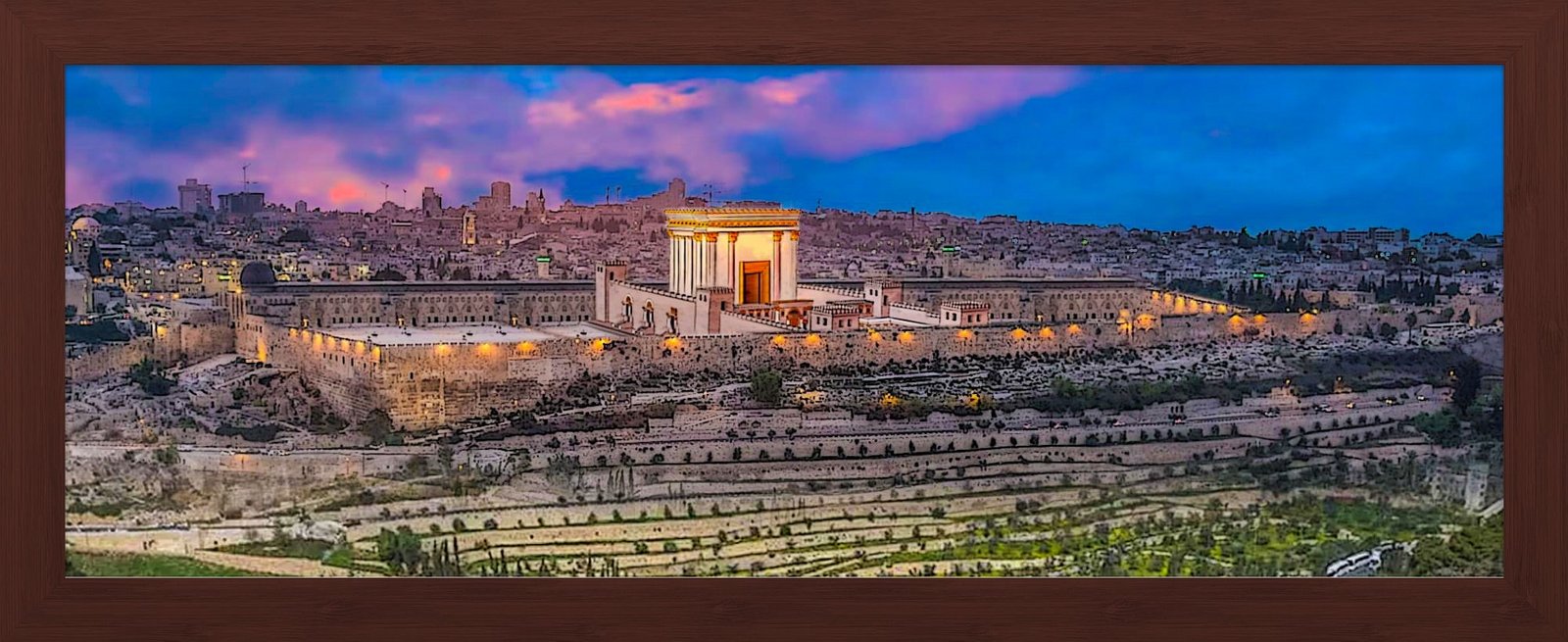
1 Rashi – (my 32nd great grandfather) place, that due
to its location, acts as a direct channel of prayer. Since the
location marked the place of the Temple, it mirrored the
location of the Heavenly Temple:
AND THIS IS THE GATE OF HEAVEN — a place of prayer
where their prayers would ascend to heaven (Pirkei DeRabbi
Eliezer 35). The Midrash states (Genesis Rabbah 69:7) that
the Heavenly Temple is situated immediately opposite the
Earthly Temple (so that the Temple at Jerusalem-Bethel may
be styled “the gate” to the Heavenly Temple).
2 Ramban – Since it was the location of the Temple, it
represented the point of entry for his prayers.
This refers to the Sanctuary which is the gate through which
the prayers and sacrifices ascend to heaven.
3 Sforno – Similar to Ramban
The gate. The ladder signified that it was from that place that
prayers ascend to heaven.
4 Bechor Shor – It marks the spot where the angels
enter and leave to do G-d’s bidding.
5 Chizkuni – A technical point based on Rashi.
וזה שער השמים, “ This is the gateway to heaven.” According to
Rashi, Yaakov referred to the Temple in heaven which is
understood to be “opposite” the terrestrial Temple. If, you the
reader were to ask how it is possible that the Temple in
heaven is opposite that on earth, seeing that the site of that
Temple had been moved by G-d, as we have explained?Theanswer is that it had been moved to be next to Yaakov. When
Yaakov had traveled, the site of the terrestrial Temple had
always moved with him, as the miracle had been performed
.for him and not for a piece of earth
6 HaKesav VeHakabbalah – Notes how the heavenly
realms work, how it represented a place where man will be
considered for each and every thing. He brings the verse in
Tehillim 73:9.
They set their mouths against heaven, and their tongues
range over the earth.
7 Kitzur Baal HaTurim a more practical understanding:
This means that at dawn the gates of heaven are opened,
and it is a good time to pray.
8 Malbim – It marked the spot on earth where G-d “sat”,
in which the gate to heaven was open directly opposite
through which prayers will go up to heaven to empty G-d’s
blessing.
9 Mizrachi – The term “gate of heaven” is to be
regarded as a parable because heaven has neither a gate
nor a window, and is just an expression of the sages.
10 Ohr HaChaim – similar to other commentators already
mentioned.
When Yaakov said “this is the gate…” he meant that the
place aligned with it above is the gate of heaven. This is why
he used the word ‘this’ (zeh) twice.
11 Rabbeinu Bachya – Firstly he notes that is
represented a vision that Yaakov was shown:
וזה שער השמים, “ and this must be the gate to heaven.” The
occurs three times in this verse. Bereshit זה expression
Rabbah 69,7 therefore claims that G’d showed Yaakov a
Temple built and destroyed; when Yaakov saw the Temple
built, he exclaimed: “how awesome is this place!” When he
this“ ,אין זה was shown the Temple ruined, he exclaimed
cannot be!” When he was finally shown the Temple rebuilt, he
exclaimed “this must be the gateway to heaven.” According to
this version of the Midrash G’d showed Yaakov only two.Temples
He then notes:
It is possible to explain our verse in a manner which shows
that it contains allusions to all three Temples. It is a well-
known fact that the word זה on occasion serves as an allusion
to G-d
Like Rashi he notes the Pirkei DeRebbi Eliezer but builds on
its meaning:
There is a Midrash in Pirke de Rabbi Eliezer, 35 referring to
the words: וזה שער השמים, “and this is the gateway to
heaven.” According to this Midrash we learn from this verse
that when one prays in Jerusalem one is as if praying
opposite the gateway to the celestial Sanctuary, to the throne
of G’d’s glory. The meaning of the Midrash is that from
Jerusalem, the gateway to heaven, prayers ascend to their
ultimate destination.
12 Radak – Brings a similar expression in Tanach where
it demonstrates prayer directly reaching G-d in heaven:
וזה שער השמים, an expression analogous to Chronicles II
30:27ותבא תפלתם למעון קדשו לשמים, “their prayer reached the
”.residence of His Holiness, to heaven
13 Sifsei Chachomim – Similar to Mizrachi:
It’s Midrashic … the Heavenly Beis Hamikdosh is situated
directly… It seems that the Midrash is not disagreeing. It is
explaining why this is the place where prayers ascend:
because it is right below the Heavenly Beis Hamikdosh.
Nonetheless, “the gate of heaven” is allegorical; heaven has
no gate or window. (Nachalas Yaakov).
14 Tur Ha’Aruch – Notes how it functions as a direct
conduit to Heaven.
“This must be the House of G-d, and at the same time the
gateway to heaven” – This is a reference to the eventual
Temple, the site from which the prayers of mankind will
ascend to heaven without making any detours. The reason
why prayers ascend more swiftly towards heaven from here,
is the fact that they accompany the fragrance of the smoke ofthe various sacrifices