
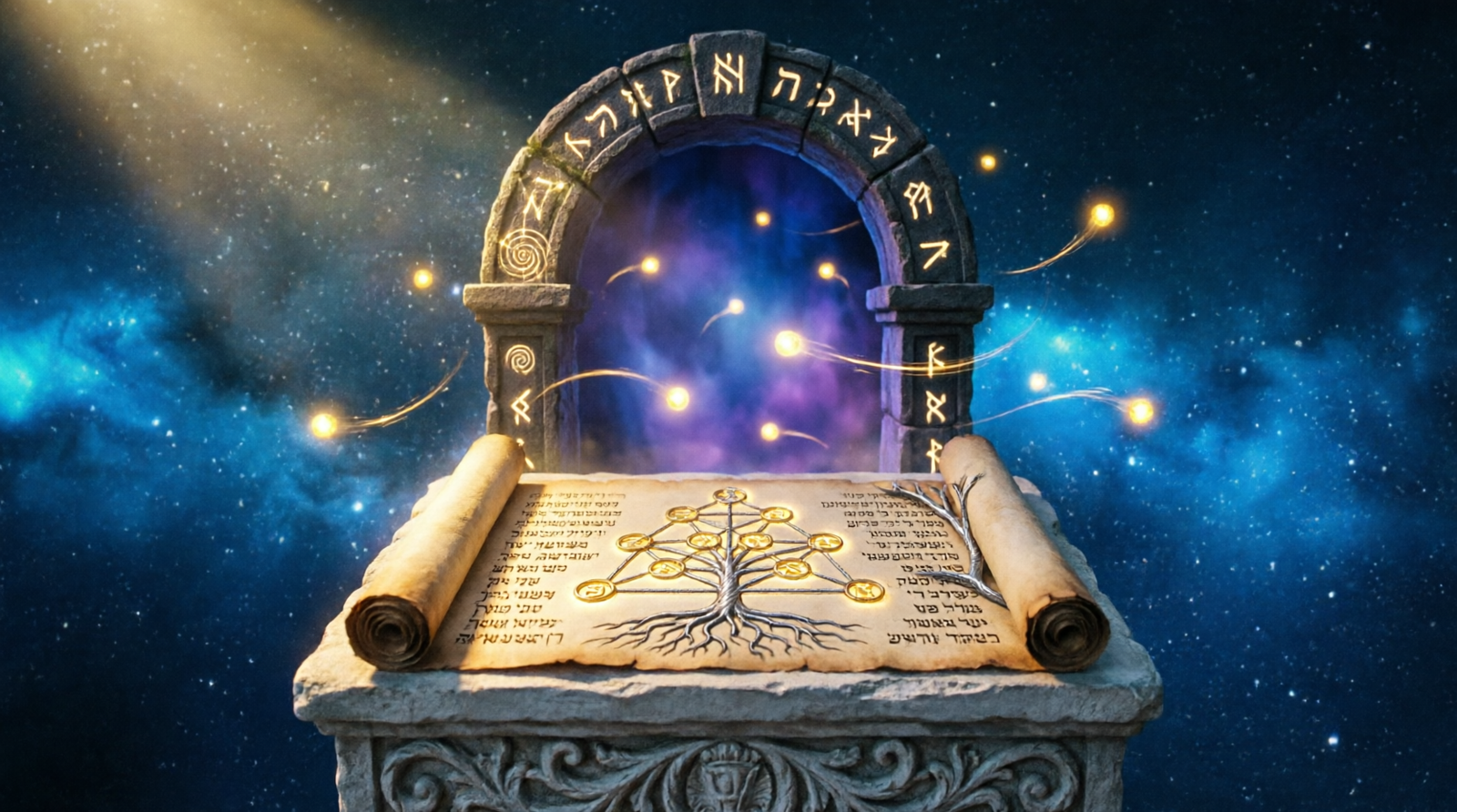
The Intricate Dance of the Soul: Understanding Nefesh, Ruach, and Neshamah in Rectification
The exploration of the human soul and its divine journey through reincarnation is a profound aspect of spiritual philosophy, particularly within certain mystical traditions. This intricate tapestry is woven from three distinct yet interconnected layers of the soul: Nefesh, Ruach, and Neshamah. Each soul level represents a unique facet of human existence and spiritual evolution, and the process of rectification is fundamental to understanding how these elements interplay in the journey of the soul.
At the inception of life, when an individual emerges into the air of this world, it is the Nefesh that first graces their being. Nefesh, often considered the most basic level of the soul, is primarily associated with the vital forces of life and physical existence. It is the foundation upon which personal identity and consciousness are built, operating at a level of instinct and basic emotional responses. The Nefesh connects the individual to the physical world, facilitating their experiences and interactions within it. Its primary function is to cater to the individual’s physical and emotional needs, forming the bedrock of one’s experiences. As the most primal aspect of the soul, Nefesh embodies the essence of life, driving the basic desires and instincts that are central to survival and personal fulfillment.
As one traverses the formative years of life, particularly through the critical threshold of maturity at age thirteen, the Ruach enters the stage. This second layer of the soul represents the emotional and intellectual faculties, imbuing the individual with a sense of moral responsibility and the capacity for higher thought and ethical understanding. The transition from childhood to adulthood heralds not just a physical maturation but a spiritual awakening, a calling to engage in the performance of mitzvot—commandments that shape one’s character and enhance spiritual growth. The Ruach serves as a bridge between the corporeal and the spiritual, enabling the individual to engage with the world on a more profound level. Through the Ruach, one begins to cultivate virtues such as compassion, integrity, and wisdom, allowing for a richer, more meaningful existence.
Should a person continue to act appropriately in alignment with divine will, they become eligible for the entrance of the Neshamah at the age of twenty. The Neshamah is the most exalted aspect of the soul, embodying the divine spark and spiritual consciousness that connects an individual to the divine source. It is through the Neshamah that one can experience a profound sense of purpose and an understanding of existence that transcends the material realm. The Neshamah is the seat of spiritual awareness, intuition, and a deep connection to the divine essence of creation. It inspires the individual to seek truth, engage in acts of kindness, and strive for a life imbued with meaning.
However, the journey of the soul is not without its challenges. The process of rectification—wherein the soul seeks to refine and elevate itself—is central to this discussion. Should an individual fail to rectify their Ruach or Nefesh, they may find themselves bound to the cycle of reincarnation. The Nefesh, if not fully refined, will necessitate multiple lifetimes to achieve the requisite purity before it can ascend to join the Ruach and ultimately the Neshamah. This cyclical process emphasizes the importance of moral choices and spiritual development throughout one’s life, as each decision impacts the soul’s journey toward completion. The very act of living becomes an opportunity for growth and transformation, where the trials faced can serve as catalysts for spiritual elevation.
Post-rectification, the dynamics of the soul further unfold. Once the Nefesh is purified, it may not need to reincarnate again with the Ruach if it has achieved a significant level of refinement. Instead, it ascends to a higher realm, prepared to await the Ruach’s eventual rectification. This ascension highlights the importance of the soul’s journey as inherently progressive, where each layer of the soul builds upon the previous one, fostering deeper levels of spiritual awareness. In contrast, if the Ruach is blemished during a lifetime, it may require additional cycles of reincarnation to achieve its own rectification. During these periods, the Nefesh and Ruach work in tandem, each influencing the other’s evolution, reflecting the interconnectedness of the soul’s components.
The process becomes even more intricate with the introduction of the convert’s Nefesh. When a soul joins with the Nefesh of a convert, it creates a powerful dynamic that supports the rectification process. The convert’s Nefesh acts as a vehicle, assisting the Ruach in refining its deeds and guiding it toward spiritual advancement. This collaboration highlights a profound unity within the soul’s journey, where shared experiences among souls contribute to collective evolution. The idea that a convert’s Nefesh can elevate another soul underscores the interconnectedness of all beings and the potential for redemption through unity and shared purpose.
Ultimately, the interplay between Nefesh, Ruach, and Neshamah underscores a broader metaphysical reality that emphasizes growth, responsibility, and the potential for redemption. Each reincarnation serves as an opportunity to refine one’s essence, leading to a harmonious integration of all three soul levels. Upon achieving full rectification, the individual transcends the cycle of reincarnation, ready to embrace the divine connection that awaits in the World-to-Come. This completion of the soul’s journey represents not only personal fulfillment but also a return to the source, where the individual can contribute to the divine tapestry of existence.
In essence, the exploration of the soul’s journey through the intricacies of Nefesh, Ruach, and Neshamah offers profound insights into the human experience. It serves as both a guide and a reminder of the spiritual responsibilities we bear in our earthly lives. The path of rectification is not merely about personal salvation; it is a communal journey that connects us all through shared experiences, aspirations, and the pursuit of higher truth. As we navigate the complexities of life, may we strive for the rectification of our souls, ultimately seeking unity with the divine and the fulfillment of our spiritual potential. This journey, rich in meaning and purpose, invites us to engage deeply with our own spiritual evolution, urging us to recognize the sacred within ourselves and in each other, as we collectively embark on the quest for enlightenment and transcendence.
**Neighbors: An Exploration of Connection and Community**
Neighbors are more than just the people who live next door; they are essential threads in the intricate tapestry of our lives. In an age often marked by rapid technological advancements and growing individualism, the relationships we forge with those who occupy the spaces adjacent to our own hold profound significance. These connections can bring comfort, foster support, and reflect our shared humanity. This essay delves into the multifaceted nature of neighborly relationships, exploring the bonds that unite us, the challenges that may arise, and the ways these interactions shape our communities and, ultimately, our identities.
At the heart of the concept of neighbors lies the fundamental idea of connection. Humans are inherently social beings, drawn together by shared experiences, mutual interests, and the simple act of proximity. The very nature of living next to someone creates a unique opportunity for interaction—whether fleeting or profound. The exchange of friendly waves across the yard, the sharing of meals, or the lending of a cup of sugar are all small gestures that build a sense of belonging and foster a spirit of camaraderie. These seemingly trivial interactions can accumulate over time, transforming neighbors into our first friends, our confidants, and even our chosen family.
The relationships we cultivate with our neighbors often serve as a reflection of our lives. Neighbors bear witness to our joys and sorrows, standing beside us in moments of celebration and offering support during times of need. They are the ones who can share in our triumphs—whether it be a promotion at work, a new addition to the family, or the completion of a long-awaited project. Conversely, they can also provide comfort during difficult times, whether it be through a simple conversation, a shared meal, or assistance during a crisis. The emotional landscape of neighborly relationships is enriched by these shared experiences, creating a bond that can withstand the test of time.
However, the dynamics of neighborly relationships are not always straightforward. Just as bonds can be strengthened through kindness and shared experiences, they can also be tested by conflict and misunderstanding. Disagreements over noise, property lines, and differing lifestyles can create friction between neighbors, leading to a breakdown in communication and trust. Yet, it is through the navigation of these challenges that we often find opportunities for growth. Learning to communicate effectively, empathize with differing perspectives, and compromise can transform a potentially adversarial relationship into one characterized by mutual respect and understanding.
The ability to resolve conflicts constructively is one of the hallmarks of a strong community. When neighbors engage in open dialogue and approach disagreements with a willingness to listen and learn, they cultivate an environment of cooperation. This process not only fosters stronger relationships but also enhances the overall quality of life in the neighborhood. Each resolved conflict can serve as a building block for a more resilient community, where individuals feel valued and heard.
The importance of neighbors transcends the personal and touches upon the communal. A neighborhood is, in many ways, a microcosm of society at large. The interactions that take place within this space contribute to the larger social fabric, influencing everything from community engagement to civic responsibility. When neighbors come together—whether to organize a community event, address local issues, or simply celebrate life’s milestones—they create a sense of shared purpose and identity. This collective spirit can lead to stronger, more resilient communities that are better equipped to face challenges and advocate for their needs.
In recent years, the significance of neighbors has been further underscored by global challenges such as the COVID-19 pandemic. During this time of isolation and uncertainty, many people found solace in their neighbors. Initiatives such as neighborhood watch programs, community gardening, and online groups for sharing resources sprang to life, showcasing the innate human desire to connect and support one another. These acts of solidarity highlight the potential for neighbors to act as a safety net, providing assistance and companionship in times of crisis.
Moreover, in a rapidly urbanizing world, where many individuals are drawn to cities for economic opportunities, the concept of neighborliness takes on new dimensions. Urban environments can be both isolating and unifying. In densely populated areas, individuals may live in close quarters yet feel profoundly disconnected. However, urban neighborhoods also provide a unique backdrop for diverse interactions. Here, neighbors often come from varied backgrounds, bringing with them a rich tapestry of cultures, traditions, and perspectives. This diversity, when embraced, can lead to vibrant communities that celebrate their differences while finding common ground.
The beauty of neighborhoods is often found in this mosaic of humanity. Festivals, cultural events, and community gatherings can serve as platforms for neighbors to share their unique heritage and learn from one another. Such interactions not only enrich the community but also foster a sense of belonging that transcends individual differences. In this way, neighborhoods become spaces of learning and growth, where individuals can broaden their horizons and challenge preconceived notions.
As we navigate the complexities of modern life, the role of neighbors becomes increasingly critical. The rise of digital communication has transformed how we interact, with social media and technology often replacing face-to-face encounters. While these tools can facilitate connection across distances, they can also contribute to feelings of isolation. In this landscape, the value of physical neighbors—those who share our immediate environment—becomes increasingly apparent. They offer a tangible connection to the world around us, grounding us in reality and reminding us of the power of human connection.
Ultimately, the essence of being a good neighbor lies in the willingness to extend oneself beyond the confines of one’s own life. It is about fostering relationships built on empathy, understanding, and support. The act of being neighborly can manifest in countless ways: offering a listening ear, sharing resources, or simply being present. These small gestures, though seemingly trivial, have the potential to ripple outward, creating a culture of kindness that can transform communities and, by extension, the world.
In conclusion, neighbors play an integral role in our lives, serving as both a reflection of our shared humanity and a source of strength within our communities. As we cultivate these relationships, we recognize their potential to enrich our lives and foster a sense of belonging. By embracing the spirit of neighborliness, we can create not only friendships but also deeper connections to the world around us, ultimately shaping a more compassionate and vibrant society. In a world where the pace of life often feels overwhelming, it is the bonds we forge with our neighbors that remind us of our shared journey and the beauty of human connection. In nurturing these relationships, we lay the foundation for a brighter, more unified future.
The Divine Mechanism of Ibur: A Path to Righteousness and Rectification
In the intricate tapestry of Jewish mystical thought, the concept of ibur—an elevation of the soul through the assistance of a righteous entity—plays a pivotal and transformative role. This metaphysical phenomenon serves not only as a conduit for personal rectification but also as an emblem of the profound interconnectedness of souls across generations. By exploring the reasons underpinning the phenomenon of ibur, we gain insight into its reciprocal benefits, which encompass both the individual undergoing rectification and the righteous soul guiding them on this sacred journey. The exploration of ibur reveals a rich narrative of spiritual growth, moral responsibility, and the ultimate quest for divine elevation.
The Nature of the Nefesh and Its Rectification
At the heart of the ibur process lies the Nefesh, the lowest level of the soul in Jewish mysticism. The Nefesh is intricately connected to the physical body and encompasses the basic instincts and drives that govern human behavior. When a person is graced with the ibur of a righteous soul, their Nefesh undergoes a profound refinement and elevation, aligning more closely with the virtuous qualities of the righteous individual. This transformation is not merely superficial; it represents a deep, spiritual metamorphosis that allows the individual to ascend to higher realms in the World-to-Come.
The process of rectification through ibur is inherently beneficial for the host individual. By aligning their thoughts, actions, and intentions with those of the righteous soul, the individual is empowered to engage in righteous deeds—mitzvot—that would otherwise remain beyond their reach. The righteous soul acts as a mentor, guiding the individual toward a path of spiritual growth and moral rectitude. This dynamic relationship fosters an environment in which the host can accumulate holiness and virtue, thereby solidifying their place within the divine hierarchy and aspiring to levels of spiritual accomplishment akin to those of the righteous individual assisting them.
The Benefits for the Righteous Soul
Conversely, the ibur process also serves as a profound source of enrichment for the righteous soul itself. The act of guiding and facilitating another’s spiritual ascent allows the righteous individual to participate in the merits accrued during this journey, amplifying their own spiritual rewards. This interdependence highlights a unique aspect of spiritual evolution: the idea that righteousness is not a solitary pursuit but rather a communal endeavor. The Talmudic assertion that “a righteous person receives his portion and the portion of his friend in the Garden of Eden” (Chagigah 15a) encapsulates this reciprocal relationship. The righteous soul, akin to a father nurturing his child, becomes intimately involved in the spiritual journey of the individual, benefiting from the rectification and elevation achieved through their collaboration.
The ibur relationship is characterized by a remarkable fluidity. Should the individual stray from the path of righteousness, the righteous soul is not bound to suffer alongside them. The nature of ibur is such that the righteous soul is not permanently attached to the host; it is a transient presence, akin to a guest who can depart when conditions become unfavorable. This unique arrangement underscores the idea that spiritual assistance is a voluntary and dynamic process, emphasizing the autonomy of both the individual and the guiding soul. The righteous soul’s decision to remain or withdraw reflects a profound understanding of spiritual agency and responsibility.
The Dynamics of Righteousness and Evil
The relationship between ibur and the moral choices of the host individual introduces a fascinating dynamic that is central to the understanding of spiritual growth. If the individual engages in righteous actions, the righteous soul remains as a partner in their spiritual journey, sharing in the rewards of good deeds. This dynamic can be seen as a reciprocal relationship, where the righteous soul not only aids the individual in their ascendance but also benefits from the accumulation of merit that results from righteous behavior.
Conversely, if the host succumbs to evil or engages in transgressions, the righteous soul is not implicated in those actions and will withdraw. This withdrawal serves as a protective mechanism for the righteous soul, emphasizing the distinction between inherent soul connections and the voluntary nature of ibur. Thus, the righteous soul, which initially entered the individual with the intention of aiding and uplifting, is not permanently bound to the host’s moral failings. This aspect of ibur serves as a reminder that while the righteous soul is present to assist, it does not negate the responsibility of the individual to choose a path of righteousness.
Ascendance Through Righteous Assistance
As the individual continues to engage in righteous actions, the journey extends beyond the rectification of the Nefesh. It encompasses the elevation of the Ruach (spirit) and Neshamah (higher soul) as well. The process of spiritual ascendance is marked by a return to the level of the original righteous soul, creating a profound connection that transcends time and space. The idea that a person can achieve rectification to such an extent that their Nefesh aligns with that of a righteous individual from a previous generation speaks to the power of collective spiritual evolution and the potential for personal transformation.
This journey towards spiritual completion is not merely an individual endeavor but reflects the broader communal and generational influences that shape the fabric of spiritual existence. Each act of righteousness performed by an individual resonates beyond the self, creating ripples of holiness that elevate not only the individual but also their ancestors and future generations. The interconnectedness of souls emphasizes the importance of community and shared purpose in the pursuit of righteousness.
The Role of Community and Generational Legacy
In exploring the concept of ibur, it is essential to recognize the role of community and generational legacy in the spiritual journey. The righteous soul that enters as an ibur may represent the collective wisdom and moral strength of previous generations. This connection underscores the notion that spiritual work is often the result of communal effort and shared responsibility. Each individual’s journey is not undertaken in isolation; rather, it is intertwined with the spiritual legacies of those who came before them.
The ibur process serves as a bridge between generations, allowing individuals to draw upon the merits of the righteous souls that have preceded them. This connection enriches the spiritual experience, enabling individuals to benefit from the accumulated wisdom and righteousness of their ancestors. The notion of spiritual inheritance reinforces the idea that one’s actions today can have profound implications for future generations, creating a cycle of righteousness that transcends time.
Conclusion
The concept of ibur encapsulates the essence of spiritual rectification, interconnectivity, and the profound potential of human elevation. It highlights the dual benefits for both the righteous soul and the individual undergoing elevation, reinforcing the importance of righteousness in the journey of the soul. Through the mechanism of ibur, individuals are equipped with a framework for transformation, allowing them to ascend to higher spiritual realms and deepen their connection to the divine.
This intricate relationship between the righteous and the seeker serves as a testament to the enduring power of goodness, illustrating that even in moments of spiritual struggle, there exists a pathway to redemption and elevation through the support of the righteous. The phenomenon of ibur not only enriches the spiritual experience but also embodies the collective potential for ascendance within the eternal journey of the soul. As individuals engage with the righteous souls that assist them, they participate in a sacred dance of spiritual growth that resonates through the ages, ultimately guiding them toward a greater understanding of their place within the divine order.
The Mystical Dimensions of Imma of Asjah: An In-Depth Exploration of Reincarnation
In the intricate and profound landscape of Kabbalistic thought, the figure of Imma of Asjah emerges as a pivotal symbol, representing divine wisdom and the nurturing aspect of creation. This archetype encapsulates not just the maternal qualities of the divine but also serves as a conduit through which the soul embarks on its intricate journey through the four spiritual worlds: Arzilus, Beriyah, Yetzirah, and Asiyah. Each of these realms is imbued with unique characteristics and spiritual energies, shaping the contours of the soul’s experiences as it navigates the complexities of existence. In this essay, we will delve deeply into the multifaceted nature of the soul’s journey, examining the roles of Nefesh, Ruach, and Neshamah in this transcendent narrative, and how their interplay reveals profound truths about spiritual growth and the nature of reality.
Understanding the Four Worlds
Central to Kabbalistic cosmology is the concept of the four worlds, each representing a different level of existence and consciousness. Arzilus, often considered the highest of these realms, is associated with divine emanation and unity. It embodies the purest form of divine light, where the soul experiences its most authentic connection to the divine source. Beriyah is the world of creation, where the divine blueprint for existence is formed. It acts as a bridge between the infinite and the finite, allowing for the manifestation of divine will into the material world.
Yetzirah, the world of formation, is where the potentialities of Beriyah are shaped and given form. This realm is closely linked with emotions and intellect, providing the soul with the capacity for growth and development. Finally, Asiyah, the world of action, is the physical realm where the soul experiences its earthly existence. It is here that the soul engages with the material world, facing challenges and opportunities that facilitate its growth and refinement.
The Dimensions of the Soul: Nefesh, Ruach, and Neshamah
Within this framework, the soul is traditionally understood to consist of three primary components: Nefesh, Ruach, and Neshamah. Each component has distinct characteristics, origins, and roles in the spiritual journey.
1. **Nefesh**: Rooted in Asiyah, the Nefesh represents the vital force of life and is closely associated with the physical body and its desires. It embodies the material aspects of existence, including instincts and basic needs. However, the Nefesh is not merely a source of base desires; it also serves as the foundation for spiritual growth. As the soul navigates its earthly existence, the Nefesh can be refined, allowing it to resonate with higher levels of spiritual light.
2. **Ruach**: Originating from Yetzirah, Ruach embodies the emotional and intellectual dimensions of the soul. It serves as a bridge between the physical and the spiritual, facilitating the development of personal attributes such as character, intellect, and emotion. Ruach is essential for self-awareness and moral reasoning, enabling the soul to engage with its environment and relationships meaningfully. As the soul evolves, the Ruach can be elevated, allowing for a deeper understanding of oneself and one’s purpose.
3. **Neshamah**: The highest aspect of the soul, the Neshamah, comes from Beriyah and represents the divine spark within each individual. It embodies pure consciousness, spiritual insight, and a profound connection to the divine source. The Neshamah seeks to return to its origin, guiding the individual toward spiritual enlightenment and fulfillment. The journey of the Neshamah is one of transcendence, calling the individual to rise above the limitations of the material world and connect with the divine.
The Dynamics of Reincarnation
The Kabbalistic understanding of reincarnation, or gilgul, reflects a deep commitment to the belief in the soul’s ongoing journey toward perfection. Reincarnation is not merely a cyclical process of birth and death; rather, it represents a profound opportunity for spiritual rectification and growth. Each life offers the soul a chance to address past transgressions, refine its attributes, and elevate its spiritual standing.
The interplay between the various components of the soul during reincarnation is complex and nuanced. For example, it is possible for Nefesh to originate from Asiyah while Ruach and Neshamah ascend from Beriyah. This dynamic illustrates the potential for spiritual refinement, where even the most material aspects of existence can resonate with higher spiritual frequencies. It is a reminder that the journey of the soul is not linear; rather, it is characterized by various paths and possibilities that allow for the emergence of unique spiritual identities across different lifetimes.
Yibum and the Interconnectedness of Souls
A fascinating aspect of Kabbalistic thought is the concept of Yibum, or levirate marriage, which serves as a unique avenue for reincarnation. When a man dies without children, his surviving brother may marry the widow to perpetuate the deceased brother’s name. In this spiritual context, the Nefesh, Ruach, and Neshamah can reincarnate together, allowing the soul to fulfill its divine purpose through familial bonds. This idea underscores the interconnectedness of souls and their shared destinies, emphasizing not only the importance of family but also the broader communal responsibilities that shape an individual’s spiritual journey.
The Divine Presence: Shechinah
The Shechinah, or divine presence, plays a vital role in this intricate framework. It symbolizes the omnipresence of the divine within the material world, bridging the gap between the earthly and the celestial. The relationship between the Shechinah and the Nefesh of Asiyah serves as a profound reminder that even the most mundane aspects of existence are imbued with divine significance. This perspective invites individuals to recognize the sacredness inherent in their daily lives, fostering a deeper connection to the spiritual realms that surround them.
The Ascendance of the Soul
As the complexities of reincarnation continue to unfold, it becomes clear that the process is not uniform or simplistic. The soul’s journey, marked by various paths and possibilities, allows for the emergence of unique spiritual identities across lifetimes. The interplay of Nefesh, Ruach, and Neshamah can manifest in myriad ways, reflecting the intricate tapestry of experiences that shape an individual’s spiritual essence.
The Kabbalistic teachings suggest that the ultimate goal of the soul’s journey is to ascend and reunite with the divine source. This ascendance is achieved through the gradual refinement of the Nefesh, Ruach, and Neshamah, as they undergo processes of rectification and transformation. Each lifetime presents opportunities for growth, learning, and self-discovery, enabling the soul to elevate its consciousness and fulfill its divine purpose.
Conclusion: A Journey Toward Enlightenment
In conclusion, the exploration of Imma of Asjah within the framework of Kabbalistic thought reveals a rich and profound understanding of the soul’s journey through the four worlds. The dynamic relationships between Nefesh, Ruach, and Neshamah, the concepts of reincarnation, and the divine presence invite individuals to engage more deeply with their spiritual paths.