
The Questions on the Zohar: A Luxury of Doubt
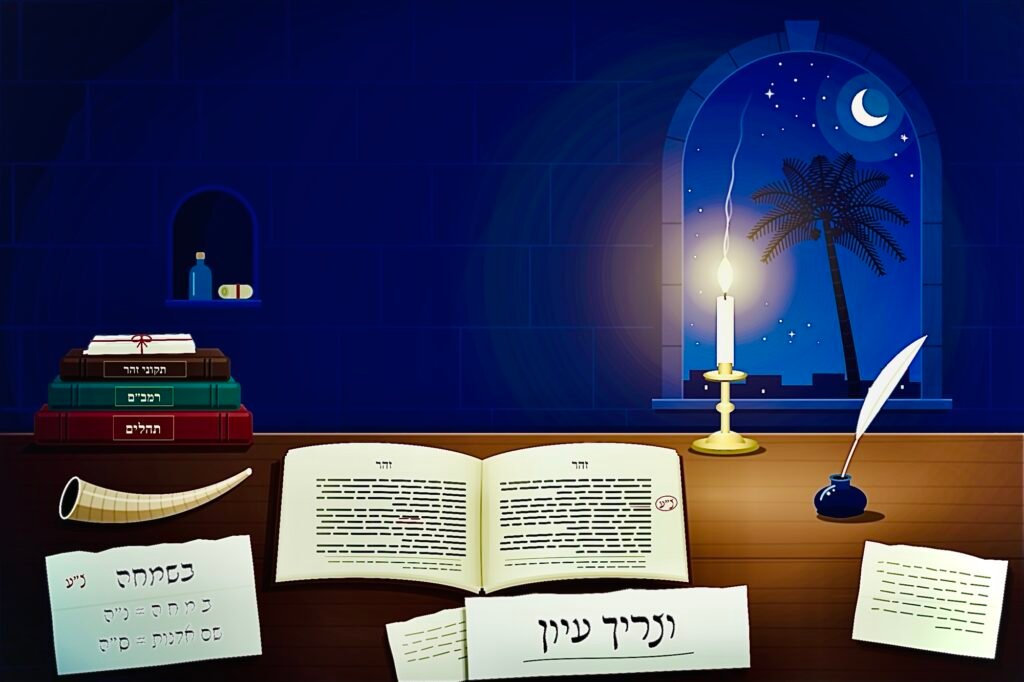
There is a distinctive kind of reverence in the opening words of *Questions on the Zohar*: not the reverence that silences inquiry, but the reverence that makes inquiry necessary. Shmuel discovers a small, scattered collection of notes among his belongings—remarks drawn from the *Book of the Tikunim* and the *Zohar*—and hesitates to leave them unexamined or to insert them casually into the texts they concern. He fears, he says, that the collection may be forgotten. So he gathers the fragments into a book, preserving them for anyone who wishes to seek them out.
The gesture is modest, almost domestic: a scholar finds papers among his sacks and gives them a home. Yet it expresses a profound understanding of tradition. Sacred texts do not reach us as immaculate abstractions. They arrive through manuscripts, commentaries, memories, editions, and acts of transmission. To preserve them is not only to copy their words; it is also to preserve the questions their words provoke. Shmuel’s booklet is therefore more than a record of difficulties. It is a portrait of learning as an act of care.
The first question concerns a small numerical discrepancy with large interpretive consequences. In *Tikun 22*, a passage associates the word *simchah*, “joy,” with the divine name *Adonai*. The explanation turns on the letters of *simchah*: the letter *shin* is connected with the three patriarchs, while the remaining letters are said to equal sixty-five, the numerical value of *Adonai*, a name associated with the *Shechinah*, the divine presence. But the arithmetic does not appear to work. The letters remaining after *shin* add up to fifty-five, not sixty-five.
Shmuel does not smooth over the problem. He records it plainly: “This requires investigation.” He then offers a possible repair. Perhaps the letters should be counted in their expanded forms: *bet* as *bet-yod-tav*, *chet* as *chet-yod-tav*, *mem* as *mem-mem*, and *heh* as *heh-aleph*. These expansions supply the missing ten. The proposal is ingenious, but its importance lies less in whether it settles the matter than in the method it reveals. A mystical interpretation may depend on a numerical claim; when the arithmetic falters, devotion does not excuse the error. The reader must ask whether the text is corrupt, whether an unstated convention is being used, or whether a new explanation can account for the discrepancy.
Here, precision becomes a form of piety. The numbers are not incidental decoration. They are part of the argument, and so they must be examined. Shmuel’s willingness to pause over a difference of ten shows that sacred meaning is not made more sacred by ignoring the details on which it rests.
A second question concerns the phrase “Let Us make man in Our image and Our likeness.” The *Zohar* connects this verse with the circumcision of a convert and with the laws of *yibbum* and *chalitzah*—levirate marriage and the ceremony by which it is refused. Shmuel asks how these laws can apply to a convert, given the conditions required for them. If the two brothers were conceived and born in holiness, then they are not converts but Jewish sons of converts; if they were not, the relevant obligations do not arise in the ordinary way. The passage seems to join concepts whose legal circumstances do not easily meet.
This is not merely a technical objection. It exposes a tension between symbolic language and legal reality. The *Zohar* may be speaking in a spiritual register, in which circumcision, kinship, and the creation of the human being acquire meanings beyond their halachic definitions. Yet the mystical register cannot simply erase the legal one. Shmuel insists that the reader notice the seam between them. What does it mean for a convert to become “man” in the sense of the verse? How does a mystical account of transformation relate to the precise conditions of Jewish law? The question preserves the possibility that the passage has a deeper meaning while refusing to pretend that its surface meaning is uncomplicated.
The booklet’s questions also move through biblical chronology and rabbinic memory. In a discussion of the binding of Isaac, the *Zohar* says that Jacob did not merit to see Abraham with his own eyes, because Abraham died when Jacob came into the world. Shmuel compares this statement with the chronology: Jacob was thirteen when Abraham died. Rabbinic tradition, meanwhile, says that Jacob cooked lentils for his father Isaac as a mourner’s meal after Abraham’s death, which had occurred five years earlier than it otherwise might have, so that Abraham would not live to see Esau turn toward wickedness at thirteen.
The difficulty lies in the meaning of “seeing.” If Jacob was already thirteen when Abraham died, then he was not literally absent from the world. Shmuel proposes a distinction: perhaps the relevant “seeing” is not physical sight but the recognition of Esau’s character when the twins reached maturity. Before that age, Esau’s evil had not yet become apparent; in this sense Abraham did not fully see what was to come. The proposal does not flatten the text into a single chronology. Instead, it tests whether a word can carry more than one kind of sight—bodily perception, moral knowledge, and the recognition of a person’s character.
This is one of the booklet’s most compelling habits: it treats language as exact, but not narrow. A word may have several layers of meaning, yet those layers must be earned. “Seeing” can become an interpretive key only after the reader has confronted the chronological obstacle. The solution emerges from the difficulty rather than bypassing it.
A similar care governs the discussion of Isaac’s resemblance to Abraham. The *Zohar* says that after Abraham’s death, his appearance remained in Isaac, so that those who saw Isaac recognized Abraham in him. Rabbinic tradition offers a related explanation: Isaac had Abraham’s countenance so that scoffers would not claim Sarah had conceived him by Abimelech. The question is whether Isaac always resembled Abraham or whether the resemblance became significant only after Abraham’s death. Shmuel examines the wording of the biblical verse, “These are the generations of Isaac, the son of Abraham: Abraham fathered Isaac,” and asks whether the phrase “his son” carries an implication beyond genealogy—perhaps a visible testimony to paternity.
Again, the issue is not simply whether two sources agree. It is how they agree, and what each one contributes. The rabbinic explanation addresses public suspicion; the *Zohar* gives the resemblance a mystical dimension. The biblical wording may bind the two together. Shmuel’s attention to a seemingly redundant phrase shows how interpretation can begin with a single word that appears unnecessary. In a tradition where nothing is presumed superfluous, redundancy itself becomes evidence.
The later questions turn from words and numbers to historical time. The *Zohar* describes Rabbi Chiya and Rabbi Chizkiyah sitting beneath a palm tree when Elijah appears to tell them that Jerusalem will be destroyed. Shmuel notes the apparent chronological difficulty: the destruction of Jerusalem occurred in the era of Rabbi Yochanan ben Zakkai, long before the generation associated with Rabbi Shimon bar Yochai and the later scholars named in the passage. Could Jerusalem have been rebuilt and then threatened again? Shmuel considers the possibility, but observes that it too creates problems in light of the traditions concerning the Sanhedrin’s successive exiles. He then entertains another explanation: perhaps the figures in the passage belong to an earlier generation than the one usually assumed.
The sequence of proposals is revealing. Shmuel does not leap from contradiction to certainty. He tests possible resolutions and records the difficulties that remain. His method is neither cynical nor credulous. He does not dismiss the *Zohar* because its chronology is difficult, but neither does he treat the difficulty as an illusion. Historical memory, textual attribution, and the identity of named scholars must all be considered. The reader is invited to participate in the investigation rather than simply receive a verdict.
The final fragment in the excerpt makes this editorial responsibility especially vivid. Shmuel identifies a passage in the *Zohar* concerning Joseph and Benjamin as textually defective and supplies a corrected version, based on older books. In the corrected reading, Joseph asks Benjamin whether he has a wife and children; Benjamin answers that he has no children, though ten are destined to come from him. Here the task is not only to interpret a difficult text but to restore a damaged one. The scholar becomes, at once, reader, critic, and custodian.
That work of restoration is inseparable from humility. Shmuel repeatedly says that a matter “requires investigation,” and he is willing to offer a possibility without disguising it as certainty. Such language may seem cautious, but it is also generous. It leaves room for later readers to continue. The booklet does not present learning as the possession of final answers; it presents it as an inheritance of unresolved questions.
This is the quiet luxury of *Questions on the Zohar*: the luxury of attention. A numerical value is checked. A legal category is tested against its conditions. A chronology is compared with rabbinic tradition. A word is examined for more than one sense. A damaged passage is collated against older copies. None of these acts diminishes the authority of the texts. On the contrary, they express confidence that the texts can withstand careful reading.
The result is a portrait of religious scholarship in which reverence and criticism are not enemies. Reverence protects the text from careless alteration; criticism protects it from careless acceptance. Between them lies the scholar’s task: to preserve what has been received, to notice where it strains, and to make the difficulty visible enough that another reader may take it up.
Shmuel begins by fearing that his scattered notes will be forgotten. By gathering them into a book, he preserves more than answers. He preserves a way of reading—patient, exacting, and unafraid to say, “This requires investigation.” In that phrase, the booklet finds its deepest meaning. The sacred is not made smaller by a question. Sometimes the question is the form that care takes.
The Zohar’s Difficult Questions: A Study in Text, Tradition, and Interpretation
The passage presented here is not a single continuous argument but a collection of questions about difficult statements in the Zohar. Its author approaches the text with both reverence and intellectual rigor: the Zohar is treated as a work of profound spiritual authority, yet its wording, chronology, and apparent conflicts with other sources are examined closely. The result is a portrait of traditional scholarship at its most searching—one that does not regard perplexity as a failure, but as an invitation to investigate.
A central example concerns Binyamin and the birth of his sons. The Zohar is understood to say that Binyamin returned to Canaan after Joseph revealed himself in Egypt, and that he fathered children there. This explanation appears to address a chronological difficulty: how could Binyamin’s sons be counted among the people who descended to Egypt if they were born only afterward? But the proposed solution creates a new problem. The brothers’ return to Canaan seems to have been brief; they soon went back to Egypt, bringing Jacob with them. There may not have been enough time for Binyamin to father ten sons, particularly if the other brothers’ families had already been established before the descent.
The question becomes more complex when the passage considers marriage and the traditions about the brothers’ wives. If Binyamin’s sons were born in Canaan, would he have married women from among the Canaanites, whom the tradition regards as unsuitable? Or were his wives among the sisters said to have been born alongside the sons of Jacob? That possibility, too, raises difficulties: the chronology and the number of children do not seem to fit neatly. The author does not force a simple resolution. Instead, he lays out the competing considerations and leaves the matter marked for further inquiry.
This method is especially revealing in the discussion of Judah’s oath. Judah had promised Jacob that he would be responsible for bringing Binyamin back safely. The passage asks whether Judah’s bones rattling in his coffin, as described in rabbinic tradition, proves that he failed to fulfill that promise. If Binyamin did return to Canaan, then Judah seems to have kept his word. Yet even then, another legal question arises: perhaps a self-imposed ban or oath must be formally annulled even after its condition has been fulfilled. The issue is not merely what happened in the biblical narrative, but how the consequences of an oath operate within Jewish law. Narrative, law, and mystical interpretation meet—and do not always align without friction.
A similar concern appears in the discussion of vows and oaths. The Zohar seems to distinguish between them in a way that conflicts with the Mishnah and with the legal tradition cited by the author. In one formulation, an oath can apply to something that does not yet exist, while a vow cannot; elsewhere, the opposite distinction appears. The author considers whether the wording could be corrected, but resists an easy emendation because the surrounding passage seems to support the difficult reading. He then explores whether the Zohar may be speaking about a different kind of stringency—perhaps the greater reach of vows in relation to commandments, rather than their application to future or nonexistent things.
This is more than a technical dispute about terminology. In the Zohar, legal concepts often carry symbolic meanings. Oaths and vows can correspond to different divine attributes or spiritual levels, so a statement that seems legally imprecise may be part of a mystical argument. Yet symbolism cannot simply erase the plain difficulty. The author’s care lies in holding both possibilities at once: the passage may be speaking in a specialized mystical register, but its wording still demands explanation.
The same tension between textual fidelity and interpretation appears in the discussion of Psalm 145. The Zohar associates certain Hebrew letters with the forces of falsehood or impurity and appears to imply that a verse should be written without a particular letter. But the familiar text of the Psalm includes that letter. The author asks whether the Zohar is referring to a heavenly version of the text rather than the version transmitted to human beings. A parallel is drawn from another passage in which a word is said to be written defectively in the heavenly Torah but fully in the Torah given to Israel.
This proposed distinction is ingenious, but it remains uncertain. The author’s teacher, Shmuel, objects that the explanation does not fully resolve the problem. If the mystical danger attaches to a particular letter, why should another verse containing that same letter be exempt? The question illustrates a key feature of the collection: an answer is not accepted merely because it is plausible. It must account for the details of the text, including the details that resist the answer.
The final example concerns the Shavuos offerings. The Zohar praises the “upper bread” associated with the giving of the Torah as a source of healing. This image can be understood symbolically: Torah nourishes and restores the soul. But the passage then appears to say that leavened bread was burned on the altar. That claim conflicts with the laws governing the two loaves offered on Shavuos, which were leavened but were not burned on the altar. The author identifies what seem to be two separate errors: the Zohar’s wording appears to say both that the loaves were burned and that they were offered upon the altar.
Here, too, the difficulty is not dismissed as insignificant. The ritual details matter because the Zohar’s spiritual interpretation is built upon them. If the physical offering is described incorrectly, the reader must ask whether the text is corrupt, whether the language is metaphorical, or whether a distinction has been lost in transmission. The passage’s insistence on this point shows that mystical meaning and practical law are not treated as separate worlds. The symbolic reading depends upon an accurate account of the ritual reality it seeks to illuminate.
Taken together, these questions reveal a distinctive scholarly temperament. The author neither rejects the Zohar when it appears to conflict with other sources nor shields it from scrutiny. He compares its statements with Scripture, rabbinic tradition, legal rulings, and the internal logic of the Zohar itself. Sometimes he offers a possible resolution; sometimes he records an objection to that resolution; sometimes he simply concludes that the matter requires investigation.
That repeated conclusion is not a sign of intellectual defeat. It is a form of discipline. The scholar acknowledges the limits of what can be established while preserving the question for future study. In this tradition, reverence does not mean refusing to ask difficult questions. Rather, reverence is expressed through the care with which those questions are asked: attention to wording, chronology, law, and context; a refusal to conceal contradictions; and a willingness to leave unresolved what cannot yet be resolved.
The passage therefore offers more than a catalogue of textual puzzles. It presents a model of learning in which faith and critical inquiry are not enemies. The Zohar is approached as a work of deep spiritual significance, but its authority does not make every sentence immediately transparent. Its difficulty invites the reader to look more closely—not only at the text itself, but at the intricate relationship between mystical interpretation, biblical narrative, and Jewish law.
Chometz Among the Matzos: A Note on the Zohar and Its Difficulties
The passage concerning chometz in the meal-offering accompanying the wine-offering of the daily offering presents a small but revealing textual difficulty. In *Hilchos Ma’aseh HaKorbanos*, chapter 12, the Rambam describes the meal-offering brought with the wine-offering of the *Tamid* as matzah. Against this background, a statement in the Zohar that refers to “two other loaves of bread, and chometz was burned among them” appears difficult to reconcile with the laws of the offerings.
The wording seems to distinguish the chometz from the “two other” loaves. If so, the passage appears to describe three items burned together: two loaves of matzah and an additional loaf of chometz. Yet this cannot be the ordinary procedure for the meal-offering accompanying the daily offering. The text therefore seems to describe an arrangement that has no clear parallel in the relevant laws.
A different textual version omits the word “other,” and even omits “among them.” According to that reading, there are only two loaves of bread, rather than two loaves plus a third, chometz loaf. This removes the numerical difficulty, but not the underlying one: the two loaves in question were not ordinarily burned on the altar. They were eaten by the kohanim.
One might try to resolve the problem by understanding the passage as referring to the *kometz*—the handful separated from a meal-offering and offered on the altar. But that explanation does not appear to work. The two loaves brought with the accompanying offerings did not have a *kometz* offered from them, as the Rambam explains in chapter 12 of *Hilchos Ma’aseh HaKorbanos*. The language of burning therefore cannot readily be explained as a reference to the usual altar-service of a meal-offering.
A further possibility is that the passage refers not to the loaves in their proper condition, but to loaves that had become invalid. The laws in *Hilchos Temidin u’Musafin*, chapter 8, describe circumstances in which the two loaves were found unfit and had to be burned. This would at least account for the act of burning. Nevertheless, the explanation remains difficult to establish. It would require the Zohar to be discussing a particular case in which the two sheep brought with the loaves had been lost, or in which the loaves had otherwise become disqualified. The passage, however, seems to speak in connection with the biblical verse itself, rather than to describe such an exceptional circumstance. The matter therefore remains unresolved.
This difficulty is characteristic of the textual questions raised by the Zohar’s treatment of biblical verses and Temple service. A single word—such as “other” or “among them”—can determine whether the passage describes two items or three, and whether the chometz is one of the loaves or something additional. Even when an alternate reading eases one problem, the legal details may leave another. The responsible conclusion is not to force the passage into a straightforward halachic description, but to note the textual variants, test the possible explanations against the laws of the offerings, and acknowledge where the evidence does not permit a definitive resolution.
Incident With the Spirit
In the account titled “Incident With the Spirit,” the young Shmuel Vital records an episode in which illness, spiritual danger, and religious authority converge. Set in Egypt in 5426 from Creation, the narrative concerns Esther, the daughter of Rabbi Yehuda Weiser, who becomes possessed shortly after her marriage. What follows is more than a report of an exorcism. It is a carefully staged encounter in which uncertainty must be overcome, an afflicted woman’s body becomes the site of competing claims, and ritual speech is used to restore order. Told as testimony for future generations, the account presents the event as evidence of divine presence among the Jewish people.
The story begins in uncertainty. Vital is summoned to examine Esther, but he cannot immediately determine what has entered her: a *mazik*, or damaging angel; a *shed*, a demon; or a *ruach ra’ah*, an evil Jewish spirit. These categories matter because each implies a different kind of being and a different spiritual condition. Rather than act on an assumption, Vital asks that a gentile judge examine the girl. During this examination, the voice speaking through Esther claims to be a gentile damager who entered her out of desire. It also boasts that it struck Vital on the shin to prevent him from returning. The judge then declares that he has captured the being in a small bottle and buried it.
Yet the apparent resolution proves incomplete. A new voice speaks from Esther, insisting that it is a Jewish spirit and asking for Vital by name. The scene shifts from the judge’s intervention to Vital’s own discernment. He approaches cautiously: the girl lies motionless, “like a stone,” beneath a white blanket, and he still does not know whether the speaker is a Jewish spirit, a demon, or a damager. His greeting—“Peace on the Jewish people”—serves as a test. Esther’s lips move, and the voice answers with a greeting of its own. Vital then asks whether the spirit is Jewish and tells it to recite the *Shema Yisrael*, the central declaration of Jewish faith. The spirit does so. In this way, the narrative makes recognition a process: identity must be demonstrated through speech, knowledge, and religious practice.
Once the spirit has been identified, Vital questions it at length. He asks its name, its father’s name, its homeland, when and where it died, how long it lived, what punishment it is undergoing, what sin it committed, and whether it is a *nefesh* or a *ruach*. He also asks who is responsible for it and whether it is being supervised. The spirit answers “correctly and appropriately,” without resistance or deception. These details give the account the texture of an inquiry, almost a spiritual deposition. Vital does not simply accept the spirit’s claims because it speaks through Esther; he tests its identity and history. The spirit, in turn, recognizes Vital as a man whose reputation has reached Heaven and asks him to rectify it and release it from the girl’s body.
The spirit’s explanation of the earlier threats complicates the story further. It denies having struck Vital or caused him pain in a dream. Those acts, it says, were the work of the gentile damager, who falsely claimed credit. The distinction is important: not every voice or action associated with the possession belongs to the same being. The account portrays the unseen world as populated by different forces whose motives and identities may be confused. Vital’s role is therefore not merely to command; he must distinguish truth from deception. His careful questioning becomes a form of spiritual judgment.
The resolution is presented as both compassionate and severe. The spirit asks Vital to rectify its *nefesh* and *ruach* and remove it from Esther. Vital agrees, but first makes it swear a solemn oath that it will not deceive him, return to the girl, or harm her, her family, the people present, or any Jew as it leaves. He also decrees excommunication and commands the spirit to depart for Gehinnom, where it may be healed. Before the ritual proceeds, he requires a reliable sign: the spirit must say, “Peace upon you.” It does so three times.
Vital then gathers ten Torah scholars and begins a sequence of ritual acts. He knocks with the spirit’s right fist while concentrating on a verse from Psalms, and the spirit recites additional psalms. Vital follows with an elaborate prayer invoking G-d’s power, mercy, and sacred Names. He asks that the spirit’s suffering in Esther’s body be accepted as atonement for its sins and that divine mercy prevail over judgment. The recitation of the Thirteen Attributes of Mercy, the blowing of the shofar, verses from Tehillim and Shemos, and repeated commands to leave all contribute to a ceremony that is at once exorcism, prayer, and plea for spiritual repair.
The moment of departure is dramatic but carefully marked. When Vital says “Leave!” for the third time, Esther’s left leg rises before the assembled witnesses. The spirit exits from the baby toe of her foot, cries “Peace upon you” three times, and receives Vital’s answer: “Go in peace.” Immediately afterward, Esther regains consciousness. She sits up, opens her eyes, and asks who all the people are, apparently unaware of what has occurred. She kisses Vital’s hand, then eats and drinks. Her return to ordinary awareness confirms, within the narrative, that the spirit has departed and that the rite has succeeded.
The account’s emotional force lies partly in this return to the everyday. Before the ritual, Esther’s body is still and inaccessible; the voice that speaks through her belongs to a hidden world. Afterward, she is once again a young woman among family and witnesses, embarrassed and hungry. The transition is striking: the extraordinary event ends not with spectacle alone but with the simple signs of restored life. Eating, drinking, and recognizing the people around her become evidence of recovery.
Vital closes by giving the date and place of the event and explaining why he has written it down: “so that they should know that G-d is among the Jewish people.” This final statement frames the narrative as testimony. The incident is not offered only as a personal achievement or a curious account of possession. It is meant to affirm that spiritual danger can be met through discernment, prayer, communal support, and divine mercy. Vital’s authority matters, but it is exercised within a wider religious world: he consults, questions, gathers scholars, recites sacred texts, and petitions G-d.
“Incident With the Spirit” thus presents possession as a crisis of identity and order. The central challenge is not simply to force an unseen being out, but to discover who is speaking, separate one spirit’s actions from another’s, and determine what justice and healing require. The narrative’s elaborate ritual language gives shape to that work. Through questions, oaths, psalms, prayers, and commands, Vital seeks both Esther’s restoration and the spirit’s rectification. The result is a story of spiritual authority tempered by caution and mercy—a testimony in which the recovery of one woman becomes a sign, for those who come after, of divine presence and protection.
This is an end of my commentary.