**Leaving the Klipos: A Personal Journey Through Soul Hierarchies and Reincarnation**
In our quest for understanding life and the mysteries of existence, the concept of the soul often emerges as one of the most profound and intriguing subjects. It invites us to contemplate where we come from, where we’re going, and what our purpose is in this vast universe. A key element of this exploration is the idea of the Klipos, which can be understood as the husks or barriers that obscure the divine light within each of us. This journey is intimately tied to the story of Adam HaRishon, the first human being, whose transgression fractured the unity of souls and cast them into the depths of the Klipos. In this exploration, we will delve into the various levels of souls, the cycles of reincarnation, and the ultimate aspiration of transcending the Klipos to reclaim our spiritual essence.
The Cosmic Fall and the Nature of Souls
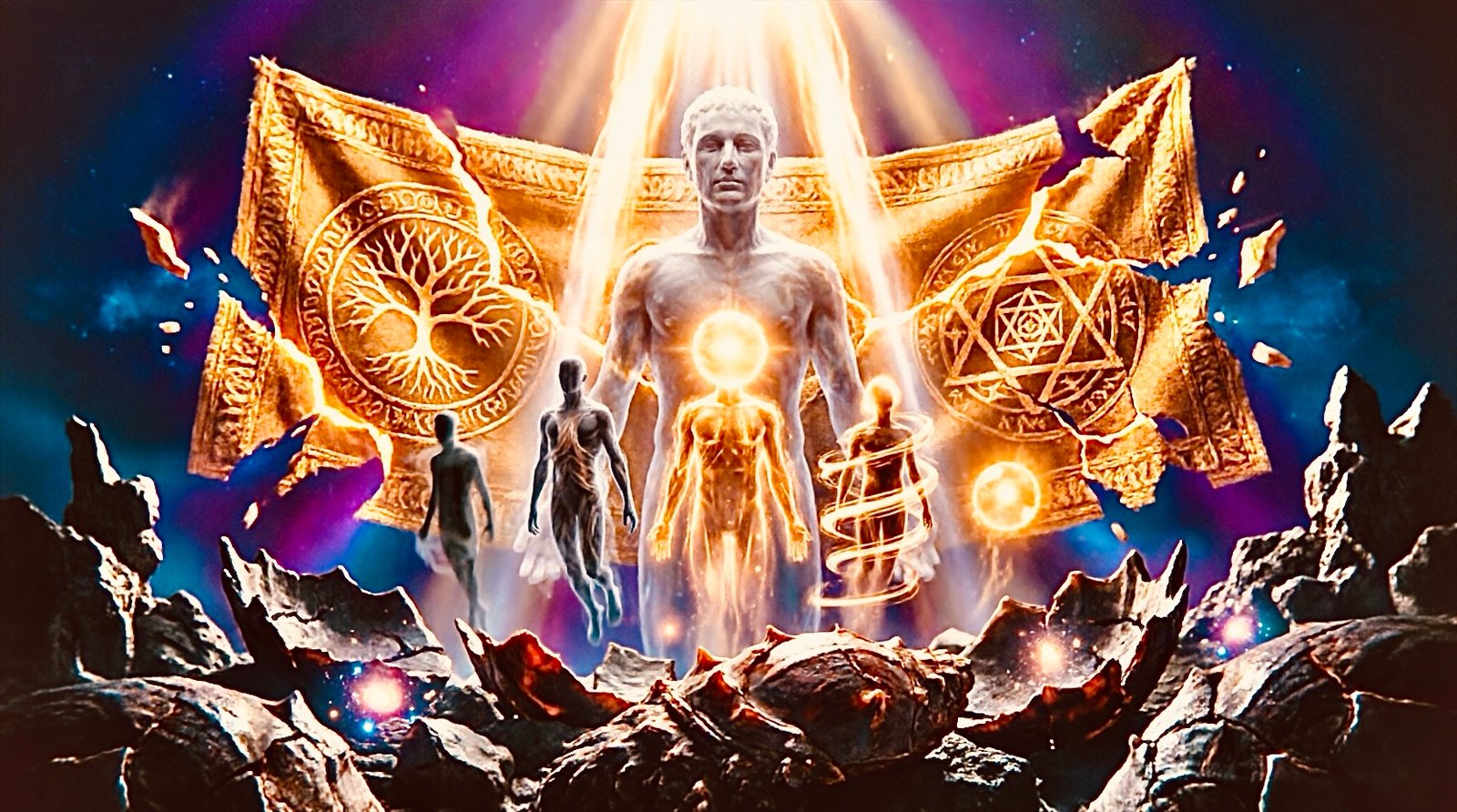
To truly understand the journey of the soul, we need to reflect on its beginnings. Imagine a time long ago when all souls were united within Adam HaRishon, the first man, who represented the highest potential of humanity. In this state of unity, there was purity and an unbroken connection to the divine. However, when Adam made his fateful choice—the first sin—the harmony of creation was shattered. It was as if a beautiful tapestry had been torn apart, scattering not just Adam but also the souls that resided within him into the dark void of the Klipos.
This event carries immense significance. It symbolizes not only a loss of unity but also the start of a long and challenging journey toward rectification. The Klipos represent the struggles, temptations, and impurities that can cloud our divine essence. Each of us, in our own way, experiences the influence of these Klipos throughout our lives. Our individual journeys are marked by challenges and obstacles that test our spirit and invite us to grow.
Among the souls that fell into these husks, we find a distinction between those that are considered “new” and those that have ancestral ties to Adam. The new souls represent fresh beginnings, with the opportunity to create unique experiences and evolve spiritually. Their arrival in the physical realm is not just a transition; it is a sacred renewal where they engage in the process of rectification. This journey allows them to learn from their experiences and move closer to their true purpose.
The Hierarchical Levels of Souls
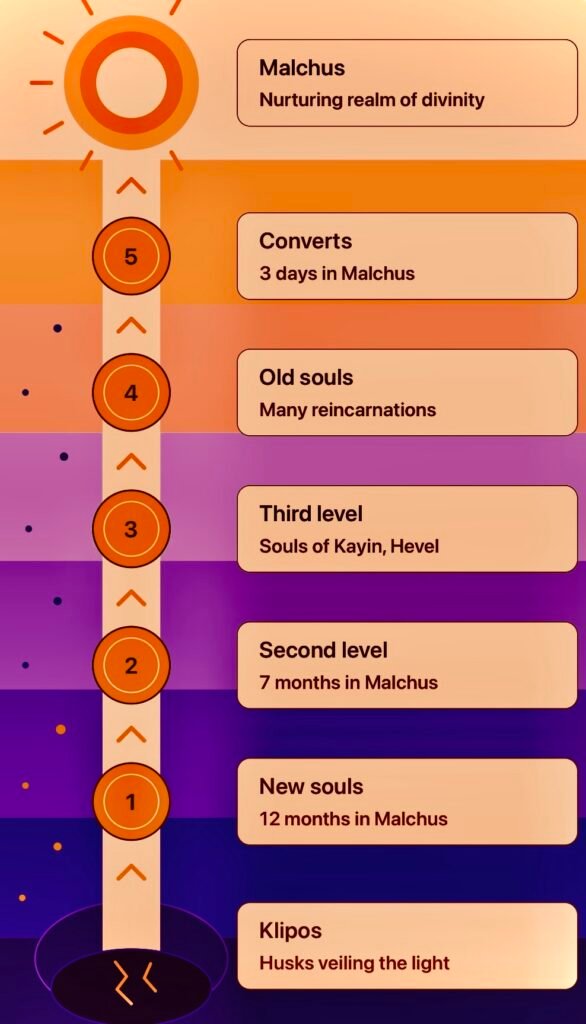
To gain a deeper understanding of our spiritual journey, we can explore the hierarchical structure of souls. This framework consists of five distinct levels, each representing a different stage of spiritual development and purity. Each level of soul has its own unique challenges and potentials, which can shed light on our individual experiences and the nature of our reincarnations.
1. **New Souls**: The journey begins with new souls, which can be likened to fresh blossoms in a garden. These souls are untainted by past experiences and carry with them immense potential. When they enter the nurturing realm of Malchus—a feminine aspect of divinity—they are given twelve months to absorb divine energy. This nurturing period is essential for preparing them for their earthly journey, allowing them to establish a strong connection to the spiritual realm.
2. **Souls of the Second Level**: Next, we encounter the second level, which consists of souls that were present with Adam HaRishon but are considered “new” because they reincarnated after his death. These souls still bear the marks of Adam’s sin, complicating their journey. They spend seven months within Malchus, a time dedicated to their purification. Despite their flaws, these souls have the potential for growth, and their experiences in this life serve as opportunities for healing and rectification.
3. **Third-Level Souls**: The third tier includes souls that were given to Adam’s sons, Kayin and Hevel, during their lifetimes. Although these souls are technically in their second incarnation, they still have the heavy task of rectifying the blemishes inherited from both Adam and their own lineage. Their journey is further complicated by the weight of their ancestral history, as they must navigate the legacies of their forebears while carving their own paths.
4. **Old Souls**: As we move up the hierarchy, we find the old souls—those who have descended from Adam into the Klipos and have reincarnated many times. These souls carry the burdens of multiple past experiences, and their path to purification can be challenging. The weight of their history necessitates deep introspection and a commitment to spiritual growth. Their journey is one of healing, as they work to overcome the limitations imposed by their previous actions and experiences.
5. **Souls of Converts**: Finally, we arrive at the fifth level, which is dedicated to the souls of converts—individuals who have chosen to embrace a new spiritual path. Their time within Malchus is brief, lasting only three days, yet this period marks a critical juncture in their spiritual evolution. The rapidity of their journey signifies the transformative power of choice and commitment. These souls embody the potential for profound change, demonstrating that redemption and renewal are always within reach for those who seek it.
The Process of Ascension and Renewal
The journey from the depths of the Klipos to the physical world is not just a passage; it is a sacred pilgrimage of renewal. Each level of soul, from the new to the old, experiences a unique duration within Malchus that correlates with their potential for growth and rectification.
Souls that remain in Malchus for extended periods emerge with a brighter light, signifying the depth of their healing and transformation. This journey is not just an individual endeavor; it is a collective ascent. Each soul contributes to the greater tapestry of existence, influencing the spiritual dynamics of the world and shaping the collective consciousness of humanity.
The Role of Time in Spiritual Renewal
The duration of a soul’s stay within Malchus is deeply significant. It is tied to the soul’s potential for rectification and growth. Those who remain longer—twelve months for new souls, seven months for the second level—gain valuable opportunities to absorb divine energy, nurturing their spiritual development. Conversely, souls like those of converts who have a shorter stay highlight the urgency and immediacy of their spiritual quests.
This relationship between time and renewal emphasizes the importance of our journeys. The experiences within Malchus act as a transformative crucible, allowing souls to refine their essence and shed the impurities from their time in the Klipos. Ascension is not just about physical rebirth; it is about a comprehensive transformation of consciousness that enables us to return to the world imbued with clarity and purpose.
Conclusion
The narrative of souls leaving the Klipos is a profound testament to the human experience—a journey filled with struggle, growth, and the quest for redemption. Each of us, in our own way, grapples with the challenges of life, seeking to navigate our paths toward enlightenment and unity. Understanding the journey of the soul, its hierarchies, and the cycles of reincarnation provides us with a framework for comprehending our own experiences and the interconnectedness of all beings. Ultimately, the aspiration to leave the Klipos is a universal call to transcend our limitations, embrace our divine essence, and journey back home to the light from which we all originated.