
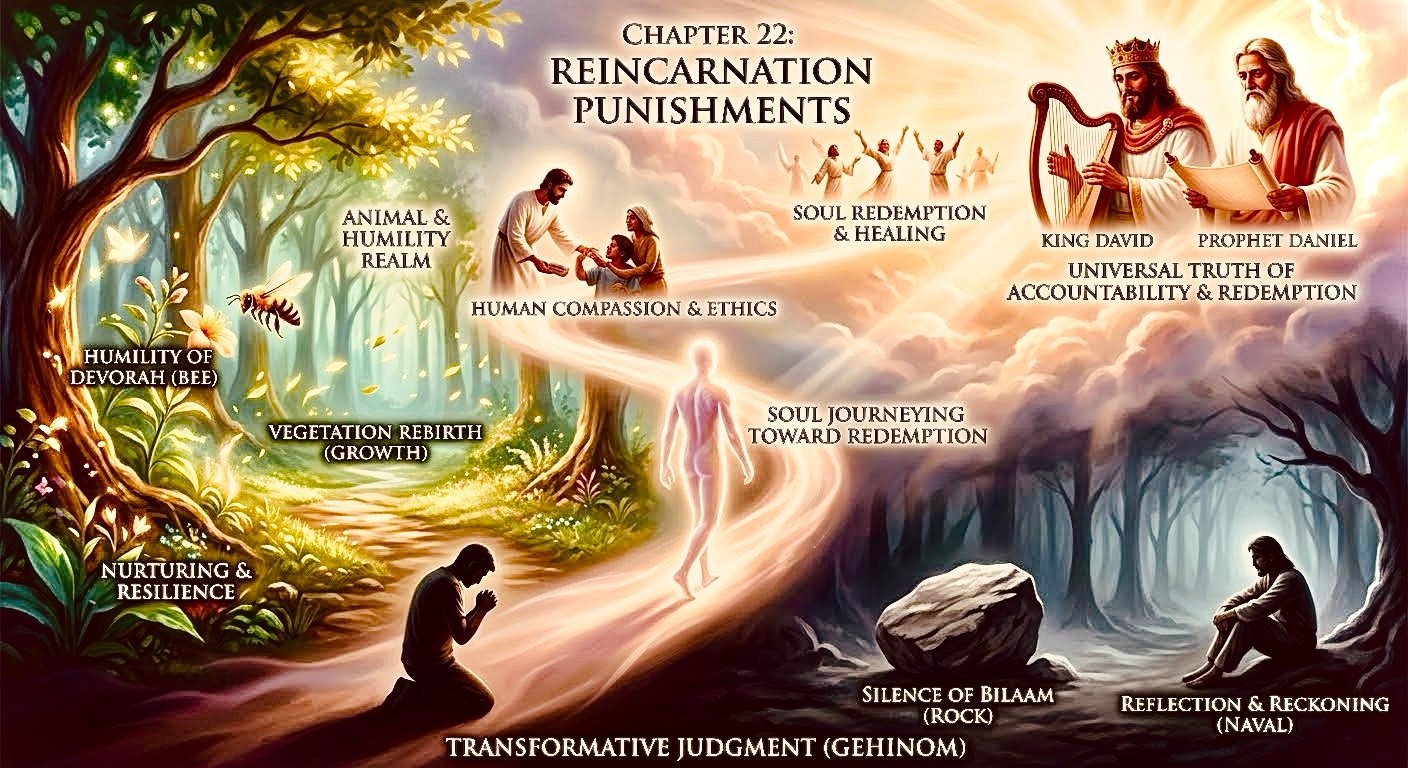
**Reincarnation Punishments: A Journey of the Soul Toward Redemption**
The concept of reincarnation has long fascinated humanity, offering a lens through which we can understand our existence, our actions, and the moral choices we make. At its core, reincarnation is about the journey our souls undertake, not just through one lifetime but across many. It invites us to explore the idea that our actions have consequences that extend beyond our current existence, shaping our future experiences in ways we may not fully comprehend. This essay delves into the idea of reincarnation as a form of punishment and redemption, inviting us to reflect on how our lives can be transformed through understanding and compassion.
Imagine for a moment that life doesn’t end with death. Instead, when our physical bodies pass away, our souls embark on a new journey, one that may involve facing the consequences of our actions from previous lives. Picture a soul that has strayed from the path of goodness, one that has caused harm to others. According to many spiritual beliefs, this soul enters a phase of judgment—a period of reflection and evaluation that allows it to confront the weight of its choices. This place, often referred to as Gehinom, may seem daunting at first, but it serves a vital purpose: to help the soul recognize its missteps and begin the process of healing.
During this time, the soul is not cast into eternal damnation; rather, it experiences a transformative period meant to inspire growth and understanding. The belief is that even the most troubled souls are given the chance to learn from their experiences, to understand the impact of their actions, and to seek redemption. This process might take years, decades, or even centuries, but it highlights a profound truth: we are all given opportunities for growth, no matter how far we may have strayed.
For those who have lived virtuous lives, the journey is quite different. Righteous individuals, who strive to live ethically and help others, often receive a different kind of treatment after death. While they may still encounter challenges in the afterlife, their experiences are framed as opportunities for refinement rather than punishment. This reflects a universal truth—that even those who are fundamentally good can learn and evolve throughout their various lifetimes.
Consider the stories of revered figures like King David or the prophet Daniel. These are individuals who, despite their many accomplishments and virtues, faced judgment for their actions. Their lives teach us that accountability is a shared human experience, regardless of our status or achievements. No one is above the moral law, and each of us must grapple with the consequences of our choices. Yet, these figures also demonstrate the potential for redemption, showing us that our journeys are not defined solely by our past mistakes but by our willingness to learn, grow, and strive for goodness.
The notion of reincarnation also encourages us to think about our responsibilities to one another. If we are all part of a continuous cycle of life, death, and rebirth, it becomes easier to empathize with the struggles of others. We begin to see that everyone we encounter is on their own journey, facing their own challenges and learning their own lessons. This understanding can foster compassion and connection, prompting us to support one another in our respective quests for growth and understanding.
Furthermore, the reflections of spiritual teachers, like the Arizal, remind us that the past and present are intertwined. These teachers often spoke of how they could connect with the souls of the deceased, offering insights into their journeys and motivations. This connection emphasizes that our existence does not end with our physical bodies; it continues as we learn from those who have come before us. The wisdom gained from past lives can illuminate our current path, guiding us toward choices that reflect our highest selves.
In today’s world, the implications of reincarnation resonate deeply. The belief that our actions have lasting consequences encourages us to live with intention and integrity. It invites us to ask ourselves how we can contribute positively to the world around us, knowing that our choices matter—not just for ourselves but for future generations. The idea that we may return to face the results of our actions in another life can inspire us to lead lives of compassion, kindness, and empathy.
Ultimately, the concept of reincarnation as a form of punishment and redemption offers a hopeful perspective on the human experience. It reminds us that we are all on a journey—a journey filled with lessons, challenges, and opportunities for growth. While the path may not always be easy, it is through our struggles that we discover our strength and capacity for change.
In this grand tapestry of existence, reincarnation becomes a mechanism not just for justice, but for healing and transformation. It teaches us that each life is a chance to learn, to forgive, and to strive for something greater. As we navigate our own lives, let us remember the interconnectedness of our journeys and approach each day with the understanding that our choices today can shape our tomorrows. By embracing this perspective, we can cultivate a sense of hope and purpose, not only for ourselves but for all beings on this shared journey of life.
**The Interplay of Body and Soul: A Personal Reflection on Reincarnation**
In the vast and intricate journey of life, the connection between our bodies and our souls often feels like one of the most profound mysteries we encounter. This relationship takes on an even deeper significance when we explore the idea of reincarnation, which suggests that our souls, after living through various experiences, transition into new lives. Each life we lead is a chapter in a much larger story, one where our actions—good and bad—shape our future paths.
Imagine our bodies as temporary homes for our souls, each incarnation serving as a unique opportunity for growth. With each new life, we carry not only the wisdom from past experiences but also the weight of our choices. It’s like a cosmic ledger: every kind act and every misstep is recorded, influencing how we move forward. The idea that our souls can return in various forms—whether as a human, an animal, or even a plant—reminds us that we are all interconnected, part of a larger tapestry of existence.
This concept of reincarnation brings with it a powerful sense of justice. It suggests that nothing we do goes unnoticed. Even the smallest actions can have a ripple effect, and the universe has an uncanny way of balancing the scales. Imagine a wise teacher who dedicates their life to educating others, only to find themselves reincarnated due to a moment of selfishness or a lapse in compassion. Such narratives serve as poignant reminders that no one is above accountability. They remind us that we all have room for growth and that even the most virtuous among us can falter.
Consider the story of a compassionate person who strives to do right by others but occasionally succumbs to the pressures of life, leading to moments of frustration or impatience. The belief in reincarnation offers solace; it suggests that each life is a chance to learn from our mistakes and to cultivate understanding and empathy. This idea provides hope for those who feel burdened by their past. It tells us that no matter how far we’ve strayed, there is always the potential for redemption and growth in future lives.
From a broader perspective, the journey of the soul through reincarnation highlights a beautiful interconnectedness between all living things. Each incarnation allows the soul to experience life from different viewpoints, fostering empathy and compassion. This journey encourages us to appreciate the myriad of experiences that contribute to our collective existence. When we recognize that every being has its own soul journey, we begin to understand the profound impact of our actions on others and the world around us.
The ethical implications of reincarnation challenge us to consider how we live our lives. The idea that our actions could lead us to a lesser form of existence serves as a powerful motivator. It encourages mindfulness and intentionality, prompting us to treat others with kindness and respect. This perspective fosters a sense of responsibility, urging us to be aware of our impact on the world. We become more compassionate when we realize that our choices can affect not just our own destinies but the lives of others as well.
On a personal level, the belief in reincarnation can evoke a mix of emotions. There is both fear and hope. The fear of being reincarnated into a less fortunate circumstance can motivate us to live ethically, while the hope of achieving greater heights in future lives inspires us to pursue personal growth and spiritual development. This dynamic interplay between fear and aspiration shapes our moral compass, guiding us through the complexities of life.
Moreover, contemplating reincarnation invites us to reflect on the essence of our identities. If our souls persist through multiple lifetimes, what does it mean to truly know ourselves? Are we defined by our past experiences, our choices, or something more profound? These reflections push us to explore our identities beyond the surface, encouraging us to embrace the complexities of who we are and who we are becoming.
As we delve into the interplay of body and soul through the lens of reincarnation, we find a rich and expansive philosophy that invites us to reflect on our lives. It emphasizes the importance of living with intention and compassion while recognizing that our journeys are ongoing. By viewing life as a series of opportunities for growth, we can cultivate a deeper appreciation for our actions and their impact on the world around us.
In the end, the journey of the soul—filled with challenges, lessons, and moments of beauty—reminds us that we are all part of something much larger than ourselves. It encourages us to embrace the complexities of life, to learn from our experiences, and to strive for a deeper connection with ourselves and others. Ultimately, the philosophy of reincarnation serves as a guiding light, illuminating our path toward understanding, compassion, and the pursuit of a higher truth. Through this lens, we can see our lives as a beautiful journey, one that is eternally evolving, teaching us the value of love, kindness, and the interconnectedness of all beings.
**The Journey of the Soul: A Story of Growth and Change**
Imagine your life as a beautiful story—a story that keeps unfolding over and over again. This is the essence of reincarnation, a fascinating idea that suggests our souls go through multiple lives, learning and growing each time. Each life is like a chapter in a book, filled with experiences that shape who we are and who we can become.
Think of your soul as a traveler, embarking on a journey through different worlds and forms. It starts out as something simple—like a rock or a drop of water. In this quiet, unassuming state, the soul has the chance to reflect on its past. It’s a time of stillness where it learns the importance of patience and the interconnectedness of everything around it. While it might seem like nothing is happening, this phase is essential for laying the groundwork for what’s to come.
As the story continues, the soul transitions into the world of plants. Picture a vibrant garden filled with flowers and trees. In this new life, the soul experiences growth in a different way. It learns about nurturing, resilience, and how to thrive in harmony with nature. This phase teaches the soul to appreciate the beauty of life and the importance of contributing to the world around it, even if it can’t move or speak.
Next, the soul takes a leap forward and becomes an animal. Imagine the thrill of running freely as a deer or soaring high in the sky as a bird! In this phase, the soul discovers a new level of awareness and instinct. It learns to navigate the world with a mix of intuition and emotion. But with this newfound freedom comes challenges. The soul must confront its instincts and make choices that reflect its true nature. Sometimes, it may stray off path, but each experience offers valuable lessons about survival, companionship, and morality.
And then, the soul reaches the most exciting part of its journey: becoming human. This is where everything comes together. As humans, we experience life in its fullest complexity—joy, heartbreak, love, and growth. This phase offers us the chance to reflect on our past actions and learn from them. We have the ability to make choices that define who we are and who we want to be. We can connect with others, show empathy, and strive for understanding, recognizing that our actions have a ripple effect on the world around us.
Think about the challenges you face in life. They aren’t just obstacles; they’re opportunities for growth. Each moment—whether it’s a joyful celebration or a painful loss—teaches us something valuable. We learn to rise above our mistakes, to seek redemption, and to become better versions of ourselves.
In this human journey, we also discover the importance of community. We’re not alone; we’re part of a larger tapestry of life. Our connections with others help us grow and evolve. We learn that kindness matters, that our words and actions shape the lives of those around us. Every interaction is a chance to make a positive impact, and every choice we make is a step on our path of growth.
Ultimately, the cycle of reincarnation reminds us that life is a continuous journey. Each phase—whether we’re a rock, a plant, an animal, or a human—offers lessons that help our souls evolve. Embracing this journey allows us to find beauty in our experiences and recognize the potential for growth and transformation that exists in all of us.
So, as we navigate our own stories, let’s remember that we’re all travelers on this path, continually learning, growing, and striving to become the best versions of ourselves.
The Reincarnation of the Soul: A Journey Through Inanimate Forms
The idea of reincarnation is a fascinating one, deeply rooted in various spiritual traditions, particularly within Jewish thought. It’s not just a notion about life after death, but a profound exploration of our moral choices, the consequences of our actions, and the possibility of redemption. Imagine the journey of a soul that goes through various forms, even into inanimate objects. This concept opens up a rich narrative about our shared human experience and the lessons we can learn along the way.
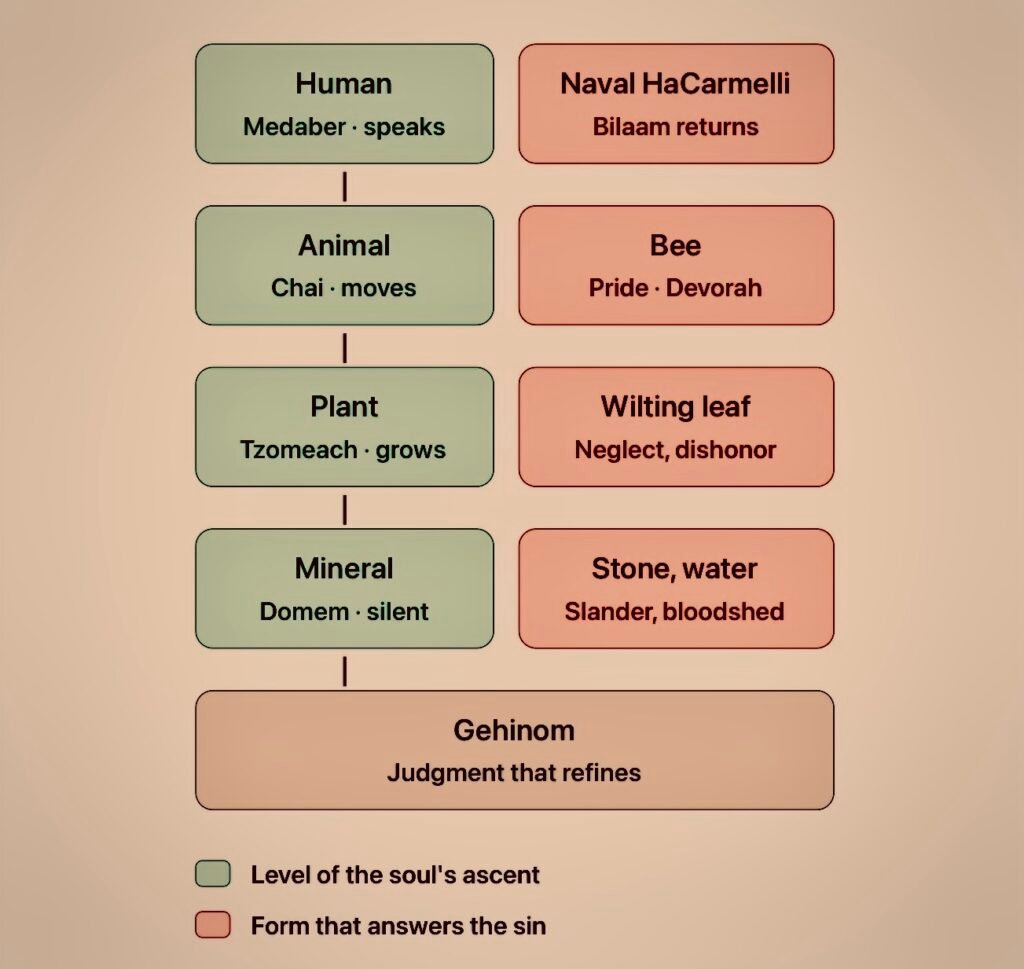
Let’s consider the story of Bilaam, a character whose life is filled with complexity. He was a sorcerer known for his remarkable ability to wield words as weapons—cursing and blessing with the mere sound of his voice. Bilaam’s life was marked by his profound gift, but also by the darkness that came with it. He sought to curse the Israelites, and in doing so, he represented a side of humanity that can easily manipulate language to create harm. In the end, Bilaam met a violent death, but this was not the conclusion of his journey; rather, it was a transformation that led him to become a rock, an inanimate object that symbolizes silence.
This transformation into a rock is heavy with meaning. In Jewish mysticism, rocks represent a state of being devoid of voice—an existence marked by silence. For Bilaam, this was not merely a punishment; it was a chance for reflection. Stripped of his ability to speak, he was compelled to confront the consequences of his past. The rock, silent and still, serves as a powerful reminder of how words can either heal or destroy. In his new form, Bilaam was forced to reckon with the weight of his words and the impact they had on others.
But the story doesn’t end there. Bilaam’s soul reincarnated into Naval HaCarmelli, a wealthy and arrogant man who would further illustrate the consequences of careless speech. Naval is infamously remembered for his disrespectful dismissal of King David, scoffing at his status and authority. His flippant remark, “Who is David and who is the son of Jesse?” reveals not just a lack of respect but also a continuity of Bilaam’s earlier behavior. It’s as if the lessons of Bilaam’s past were echoing through time, urging a reckoning.
When Naval insulted David, it set off a chain of events that could have led to violence and chaos. David, understandably angered, sought to retaliate. In this moment, Naval had to face a critical choice—would he continue down the path of arrogance, or would he recognize the gravity of his words? This moment of self-awareness, a realization that he once existed as a silent rock, marked a turning point for him. The weight of his own insults began to sink in, illustrating how the journey of the soul is one of continual learning and growth.
The broader implications of these stories resonate deeply within us. They serve as a powerful reminder of the impact that our words can have on others. In Hebrew, the term “nachashim” means both “snake” and “to guess by witchcraft,” highlighting the dual nature of language—the potential for both wisdom and harm. It prompts us to think about our own speech. How often do we speak without considering the effects of our words? The transformations of Bilaam and Naval are cautionary tales, illustrating that our choices carry weight, and that silence can sometimes be a more powerful response than harmful speech.
The narrative expands even further, suggesting that reincarnation may extend beyond human forms into the natural world. Those who engage in slander or gossip may find themselves reborn as stones. This idea serves as a stark reminder of the consequences of our words and urges us to reflect on our actions. The imagery of stones emphasizes silence, as they cannot speak, mirroring how harmful words can stifle the voices of others.
Moreover, the notion of reincarnating as vegetation, like trees or leaves, adds another layer to this exploration. A person who has caused suffering through neglect or dishonorable behavior may find themselves reborn as a wilting leaf, swaying in the wind before ultimately falling to the ground. This transformation serves as a powerful metaphor for the transient nature of life and the inevitable consequences of our actions. The cycle of life, death, and rebirth offers both a form of punishment and a chance for renewal, embodying the essence of our human experience.
Imagining reincarnation into water brings a new depth to the discussion. Those who have spilled blood might find themselves endlessly submerged, symbolically drowning in their own misdeeds. This imagery evokes a sense of divine justice, where one must face the ramifications of their choices, even in a transformed state. The relentless flow of water serves as a metaphor for the inescapable nature of our past actions, reminding us that we cannot escape the consequences of our choices.
As we think about reincarnating as animals, we encounter additional layers of meaning. Those who embody pride may find themselves reduced to a bee, a creature that works hard but can also deliver a painful sting. This transformation serves as a reminder of the importance of humility and the dangers of arrogance. The industrious bee, while essential to the ecosystem, also illustrates how pride can lead to suffering for oneself and others.
In conclusion, the rich narrative of reincarnation, as illustrated through the lives of Bilaam and Naval HaCarmelli, invites us to reflect on our moral responsibility and the power of our words. Their journeys remind us that every soul’s path is a chance for learning, growth, and redemption. The idea that we might be reborn into various forms compels us to consider the choices we make and the impact they have on those around us.
Ultimately, these stories encourage us to engage in self-reflection, urging us to harness the power of our words for good. They remind us that our lives are interconnected, and the way we communicate can either build bridges or create barriers. As we navigate our own journeys, let us carry forward the lessons learned from these tales, striving to speak with kindness and to treat others with the respect they deserve. After all, the journey of the soul is a testament to our capacity for growth and the transformative magic found in the connections we share.
**The Reincarnation of Devorah: A Journey Through Arrogance and Redemption**
In the realm of spiritual philosophy, the idea of reincarnation offers a fascinating perspective on our lives and the choices we make. It encourages us to reflect on our actions and their consequences, not just in this lifetime but across many. One story that stands out in this exploration is that of Devorah—a woman whose journey is marked by arrogance, the lessons of her character, and the profound effects those traits can have on her soul.
Devorah is not just a character; she represents a common struggle that many of us face. Her arrogance isn’t just a simple flaw; it defines her interactions and relationships. Imagine someone who walks through life with an air of superiority, believing that her position makes her exempt from the responsibilities that others shoulder. Devorah often finds herself thinking, “Why should I have to do the work that everyone else does?” This mindset creates a rift between her and her community, as she fails to recognize that true leadership is about serving others, not elevating oneself above them.
Her arrogance is compounded by her tendency to talk incessantly. Picture her in a conversation, words flowing out with little regard for the thoughts or feelings of those around her. “Her mouth was never silent,” could be a line from a play that captures Devorah perfectly. In her world, her voice drowns out the sounds of genuine connection and understanding. This constant chatter, while perhaps intended to convey her thoughts and feelings, often leaves little room for others to speak or reflect. It’s a struggle that many of us can relate to—how often do we find ourselves dominating conversations, missing the chance to listen, to learn, and to truly connect with others?
As Devorah’s story unfolds, we see how her arrogance and incessant talking shape not only her relationships but also her destiny. According to various beliefs about reincarnation, our actions in this life can dictate the circumstances of our next. For Devorah, her hubris leads to a significant transformation—she is reincarnated as a bee. This change is symbolic in many ways. Bees, while industrious and essential to our ecosystems, can also be seen as bothersome, buzzing incessantly around us. It’s as if the universe has chosen a form for Devorah that reflects her past behavior, compelling her to confront the consequences of her arrogance.
In her new life as a bee, Devorah experiences a profound shift. While she once reveled in the idea of being above others, she now finds herself part of a collective, working tirelessly for the good of the hive. This transformation serves as a lesson about community, humility, and the importance of collaboration. The buzzing she once found irritating is now a constant reminder of her past life—a call to remember that every being has a role to play, and that no one is truly above the rest.
The story of Devorah invites us to consider our own lives. It prompts us to reflect on our actions and the traits we cultivate. How often do we find ourselves caught in the trap of arrogance, believing we are more important than those around us? How frequently do we speak without listening, drowning out the voices of others? Devorah’s journey challenges us to confront these tendencies within ourselves.
The concept of reincarnation suggests that we carry the weight of our actions with us, shaping not only our current experiences but also our future ones. Devorah’s tale serves as a reminder that our choices matter, that the way we treat others can leave an indelible mark on our souls. It also offers a glimmer of hope: the possibility of growth and redemption. Even in her rebirth as a bee, Devorah has the chance to learn and evolve, to understand the value of humility and the importance of working together for a common purpose.
As we reflect on Devorah’s character, we are invited to embark on our own journeys of self-discovery. Her story encourages us to embrace the values of compassion, cooperation, and authentic communication. By doing so, we not only enrich our own lives but also contribute positively to the world around us. In a society that often celebrates individualism and self-promotion, Devorah’s journey reminds us of the beauty and strength found in humility and service to others.
In conclusion, the tale of Devorah is not just about arrogance and its consequences; it’s a universal exploration of the human condition. Her struggles resonate with our own, urging us to reflect on who we are and who we want to become. It’s a call to embrace our imperfections, to listen more than we speak, and to recognize the interconnectedness of all lives. Ultimately, her story serves as a poignant reminder that our legacies are shaped not by our arrogance, but by our capacity for kindness and our commitment to the greater good. So let us strive to be more like the bee in Devorah’s new life—working diligently, supporting one another, and buzzing with purpose, rather than drowning out the symphony of life around us.