
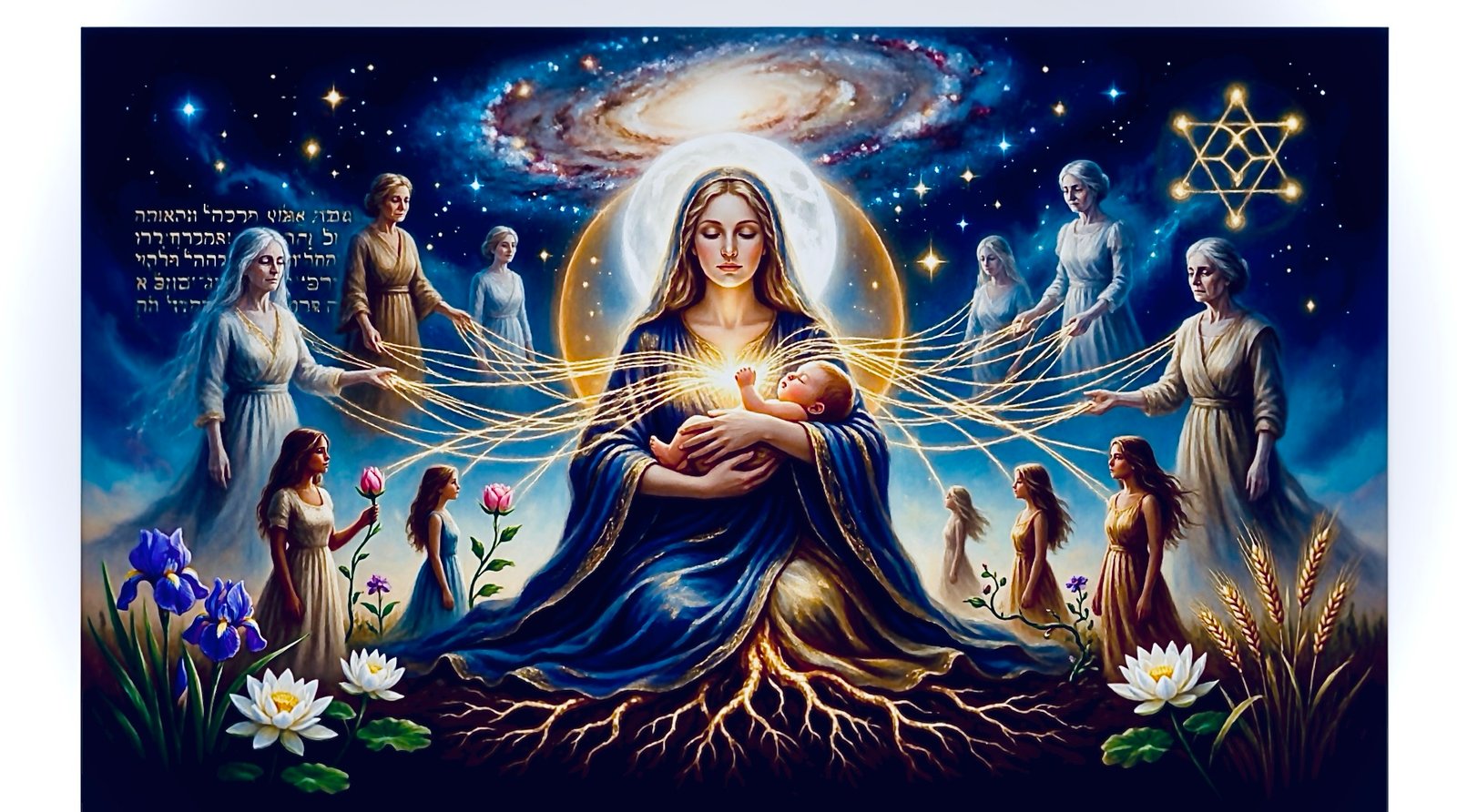
Who Reincarnates: A Journey Through Gendered Souls in Life’s Cycle

Reincarnation is a concept that resonates deeply across various cultures and spiritual traditions. In Jewish mystical teachings, particularly within Kabbalah and Hasidic thought, this idea takes on a fascinating nuance—especially when we explore the roles of men and women in this cycle of life and rebirth. The notion that reincarnation primarily concerns men, while women hold a distinct spiritual status, opens up a rich dialogue about the soul’s journey and its implications for gender. This exploration invites us to reflect on our own experiences, beliefs, and the intricate ways in which gender shapes our spiritual paths.
At the heart of this discussion is a thought-provoking verse from the book of Koheles (Ecclesiastes) that states, “A generation goes and a generation comes, but the land remains forever.” This line serves as a powerful metaphor for understanding reincarnation in Jewish thought. Here, “generation” is often interpreted to refer to men—those who cycle through different lives to address their spiritual missions and learn from their mistakes. In contrast, “the land” is seen as representing women, who, in this framework, do not follow the same pattern of reincarnation. This distinction raises questions about the nature of spiritual journeys: while men are viewed as returning to rectify their past, women are seen as having a more direct path to spiritual elevation.
The Talmud further enriches this discussion by suggesting that men who dedicate themselves to the study of Torah create a protective shield against the spiritual consequences of their actions, particularly the torments of Gehinom (often likened to hell or purgatory). A poignant example is the story of Elisha ben Abuyah, known as Acher. Despite his deep engagement with Torah, he ultimately strayed from the path of righteousness and was excluded from the World-to-Come. His life serves as a cautionary tale, illustrating how reincarnation becomes a vehicle for atonement, allowing male souls to confront their failings and grow over multiple lifetimes.
In stark contrast, women are often viewed as having a different spiritual journey. Instead of reincarnating, they are believed to enter Gehinom to cleanse their sins, suggesting a more straightforward path toward purification. This perspective highlights the unique spiritual challenges and responsibilities assigned to each gender. Women may also experience a mystical phenomenon known as ibur, where they temporarily house the souls of others—often female souls—enhancing their spiritual potential. This relationship between female bodies and male souls adds complexity to our understanding of reincarnation, suggesting that spiritual journeys are not strictly defined by gender but are instead interwoven in intricate ways.
One particularly intriguing aspect is the idea that male souls can reincarnate into female bodies. This phenomenon often occurs when a male soul has unresolved spiritual issues or unrectified sins. When a male soul inhabits a female form, it may face unique challenges, particularly around issues of conception and childbirth. Kabbalistic teachings indicate that a man’s soul in a woman’s body might struggle to conceive, as it lacks the nurturing qualities typically associated with femininity. In such cases, the involvement of a female soul through ibur becomes vital, helping to facilitate the process of overcoming these challenges. This dynamic illustrates a cooperative effort between souls, emphasizing that spiritual growth can be a shared journey across lifetimes.
The implications of these beliefs extend beyond the mystical; they prompt us to consider the broader cultural narratives surrounding gender roles in spirituality. For instance, why do men seem to require further rectification through reincarnation, while women are considered to have a more direct path to spiritual fulfillment? How do these perspectives influence our understanding of gender identity and spirituality today? While these questions may not have clear answers, they encourage us to engage in deeper conversations about the spiritual narratives that shape our lives.
In practical terms, these teachings can inspire individuals to reflect on their actions and choices within their gendered experiences. For men, the call to engage in Torah study and spiritual cultivation serves not only as a means of personal growth but also as a contribution to the collective spiritual journey. For women, the chance to participate in ibur and elevate their unique spiritual essence underscores the importance of community and interconnectedness in the spiritual landscape. Both paths, like threads in a tapestry, ultimately work toward the same goal: achieving spiritual elevation and rectification.
In conclusion, exploring who reincarnates within Jewish thought reveals a rich and nuanced understanding of the soul, gender, and spiritual rectification. The distinctions made between male and female souls, the implications of reincarnation, and the unique roles each gender plays in the grand scheme invite us to reflect on our own spiritual journeys. Whether through the lens of Kabbalistic teachings or other spiritual frameworks, the journey of the soul remains a profound exploration of existence—a testament to our ongoing quest for redemption, understanding, and connection in the vast expanse of the universe. As we contemplate these teachings, we are reminded that the journey of the soul is not just an individual endeavor but a shared pilgrimage through life’s complexities, where each generation contributes to the timeless quest for spiritual fulfillment and unity with the divine. Through this lens, we can appreciate the beauty of our diverse paths, recognizing that our experiences, struggles, and triumphs are all part of a larger, interconnected narrative.
The Beautiful Tapestry of Life: A Journey through Reincarnation and the Female Spirit
Life is a mosaic of experiences, emotions, and connections. Among the most profound of these connections is the bond between mothers and daughters, a relationship that can transcend time and even the boundaries of existence itself. Imagine a woman who carries within her the soul of a man, destined to give birth only to daughters. This isn’t just a fascinating spiritual concept; it’s a beautiful exploration of how our lives are interconnected in ways we might not fully understand.
Think of a mother who, while nurturing her daughters, is not just shaping their lives but also participating in a much bigger story. Each daughter she brings into the world is like a piece of a puzzle, carrying with her the hopes, dreams, and lessons of the souls that have come before. It’s as if every birth is a reunion, a chance for those lost souls to find their way back into the world through the loving embrace of their mother.
This bond is sacred. Each time a daughter is born, she’s not just a new life; she’s a continuation of a lineage, a thread woven into the fabric of family history. The act of giving birth transforms into a spiritual rite, where the mother becomes a bridge between generations. She doesn’t just nurture her child; she becomes part of a cycle that connects the past with the future, allowing souls to grow and learn together.
However, this journey isn’t without its challenges. Imagine if, at the moment of a daughter’s birth, a male soul were to enter her life instead. This twist in the cosmic plan could leave the original female soul feeling displaced. The mother might find herself in a unique situation, unable to have more children unless that original soul returns. It’s a poignant reminder of how delicate and intertwined our spiritual connections can be.
Life and death become intertwined in this narrative. If a daughter were to pass away, it might create an opening for a female soul to return to her mother. This cyclical nature of existence illustrates that our lives are not just linear journeys but a series of experiences, each one shaping who we are. The mother, guided by her unique essence, navigates these spiritual relationships, always searching for the right soul to join her family.
But this isn’t just about destiny; it’s about meaning and purpose. The search for the right soul isn’t random; it’s a spiritual quest that reflects our interconnectedness. The bonds formed between mothers and daughters are rich with shared experiences and lessons learned over lifetimes. This connection weaves a tapestry of love, support, and growth that extends beyond the individual family to touch the lives of others in profound ways.
When we think about the historical context of these beliefs, we see how deeply the feminine spirit has been celebrated across cultures. The idea of the goddess, representing wisdom and nurturing, reminds us that femininity is a powerful force in the universe. In this light, childbirth is not merely a biological event but a sacred act that honors the divine within us all.
As we reflect on these themes, we are invited to reconsider what it means to be a woman, a mother, and a daughter. A woman with a male soul giving birth to daughters challenges our conventional views of gender. It encourages us to see that our identities are complex and fluid, shaped by our experiences and the souls we share our journeys with.
Karma also plays a significant role in this exploration. Our actions and choices create ripples that influence not just our lives but the lives of those around us. For a mother, each daughter represents a chance to engage with the lessons of the past and create a more meaningful future. The love and wisdom she imparts can echo through generations, shaping the destinies of those who come after her.
Ultimately, this journey through reincarnation and the feminine spirit leads us to a deeper understanding of life itself. It reminds us that we are all connected, part of a larger story that binds us together. In celebrating the unique experiences of motherhood and daughterhood, we honor the rich tapestry of human existence, where every thread tells a story of love, resilience, and the beautiful dance of souls that brings us all together.